

Adhesive-Backed Absorbent Floor Mats: A Buyer's Guide to Backings, Substrates and Use
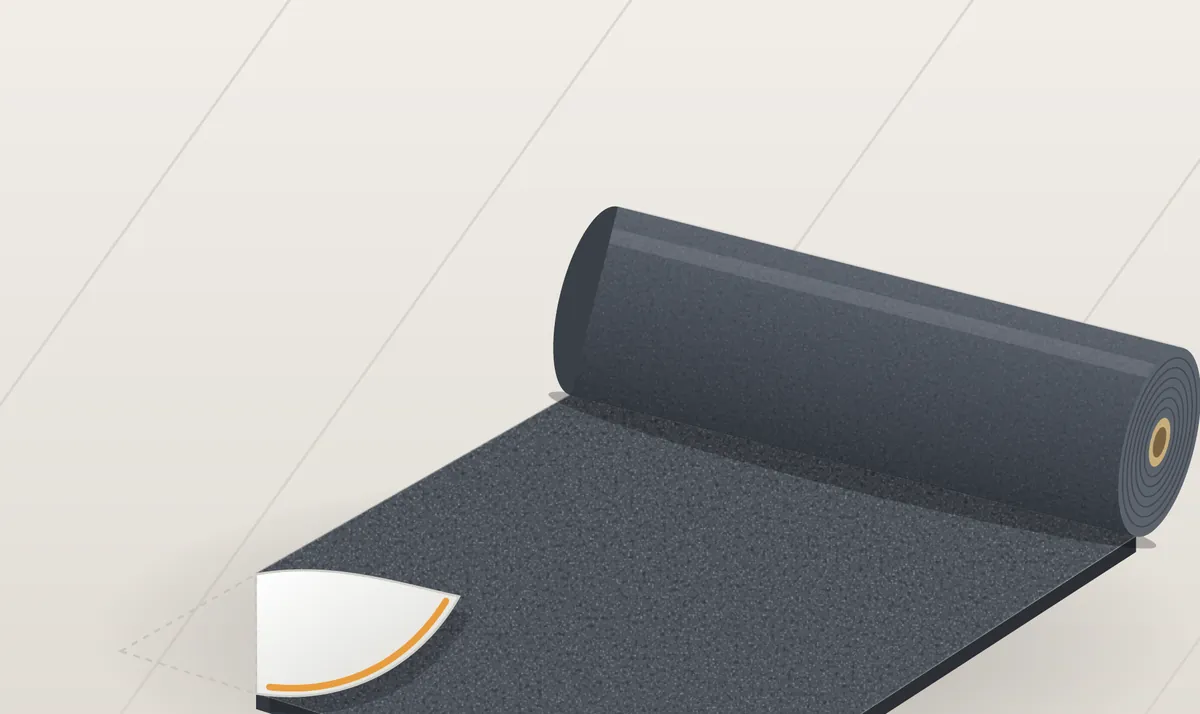
Wet entrances, oily walkways and busy loading docks all share the same problem: liquids get tracked across hard floors, and a loose mat that slides, curls or bunches up creates a new hazard of its own. Adhesive-backed absorbent floor matting solves both sides of that problem. It soaks up oil and water-based liquids, and its backing grips the floor so it stays flat under feet, trolleys and forklifts.
This guide is written for distributors, safety-product brands and facility buyers who are sourcing adhesive-backed absorbent floor matting for their own range. It covers how the product is built, which backing to choose, where it works best and what to ask a manufacturer before you place a container order.
What adhesive-backed absorbent matting is
The working layer is a heavyweight needle-punched nonwoven. In needle punching, thousands of barbed needles interlock the fibres mechanically, so the fabric is dense and strong without chemical binders. That structure gives the mat its absorbency and its resistance to wear. If you want to understand the base fabric in more detail, our page on needle-punched nonwoven fabric explains the process.
On the underside sits the backing. With an adhesive backing, the matting bonds to the floor and stays in place even under heavy foot traffic or forklift traffic. Because it is held flat along its full length, it does not create the trip edges that loose mats are known for. At the end of its service life, it lifts away in one piece, with no scraping, no grinding and no long floor closures.

Choosing the right backing
The backing decides how the mat behaves on the floor. We make four variants, and each suits a different job:
- Adhesive poly film – a secure floor bond plus a liquid-proof barrier, so spills are held in the mat and kept off the floor underneath.
- Adhesive PP spunbond – a secure bond on a tough, flexible base, for routes where the matting needs to follow the floor closely.
- Poly film without adhesive – lies flat as a liquid barrier and can be repositioned freely, useful where the mat moves with the work.
- No backing – plain needle-punched absorbent for lining, wiping and general absorbent use.
For most walkway and entrance programmes, buyers choose one of the two adhesive versions. If your customers need to keep the floor itself completely dry, the adhesive poly film is usually the better fit, because the film stops liquid from passing through.
PET or PP substrate?
The absorbent layer is made in 100% PET (polyester) or 100% PP (polypropylene). The right choice depends on the traffic the mat will carry, the liquids it will meet, and any heat or UV exposure on site. Tell us the application and we will recommend the substrate, then make it to your specification. The standard colour is dark grey, which hides dirt well in busy areas; custom colours are possible against a minimum order quantity.
Where it works best
Adhesive-backed absorbent matting is used wherever liquids are tracked across hard floors and a loose mat would be a problem:
- Entrances and lobbies, especially for wet-weather and winter track-in
- Supermarket produce and freezer lines
- Production walkways and work cells
- Loading docks and forklift routes
- Floor protection during renovation work and events

It works alongside other absorbents rather than replacing them. For larger spills, sites still keep loose universal absorbent pads and rolls, and oil-only absorbents where water must be repelled. The adhesive matting covers the everyday drips and track-in along fixed routes, so the floor stays clean between clean-ups.
Rolls or pre-cut mats
Both formats are available with every backing. Rolls suit long runners along aisles, walkways and dock routes, where the user cuts the length on site. Pre-cut mats suit fixed spots such as machine bases, doorways and work stations, where a ready-to-use size saves time. Many distributors stock both, to cover large projects and quick replacements.
Fitting tips to pass on to your customers
- Apply to clean, dry and sound hard floors; dust and moisture weaken the bond.
- Test a small area first over painted or freshly coated surfaces.
- Roll the matting out flat and press it down along its full length.
- Replace it when it is saturated or worn: it peels up in one piece.
What to ask a supplier
Before you commit to a programme, ask any manufacturer these questions:
- Which backings do you make, and which do you recommend for my application?
- Is the substrate PET or PP, and why?
- Do you supply both rolls and pre-cut mats, and in which sizes?
- Can you pack under my brand, and what are the packing options?
- What is the minimum order, and can I combine this product with others in the same container?
- Which shipping terms do you offer, and do you provide REACH and SVHC declarations for European customers?
How we supply it
Samridhi Crreation has manufactured nonwovens in India since 2004. We make adhesive-backed absorbent matting for distributors worldwide under their own brand (private label), packed in boxes or polybags. The minimum order is one 40'HQ container, and 5–6 different products can be combined in the same container, so the matting can travel together with your pads, rolls and socks. We ship FOB India as standard from Mundra or Nhava Sheva, with CIF and DAP on request, and provide REACH and SVHC declarations for customers in the European Union.
See the full range of backings, substrates and formats on our adhesive-backed absorbent floor mat page, or send us your requirement for a quotation and samples.