

Chemical Absorbent Pads, Rolls and Socks: A Buyer's Guide to Compatibility and Sourcing
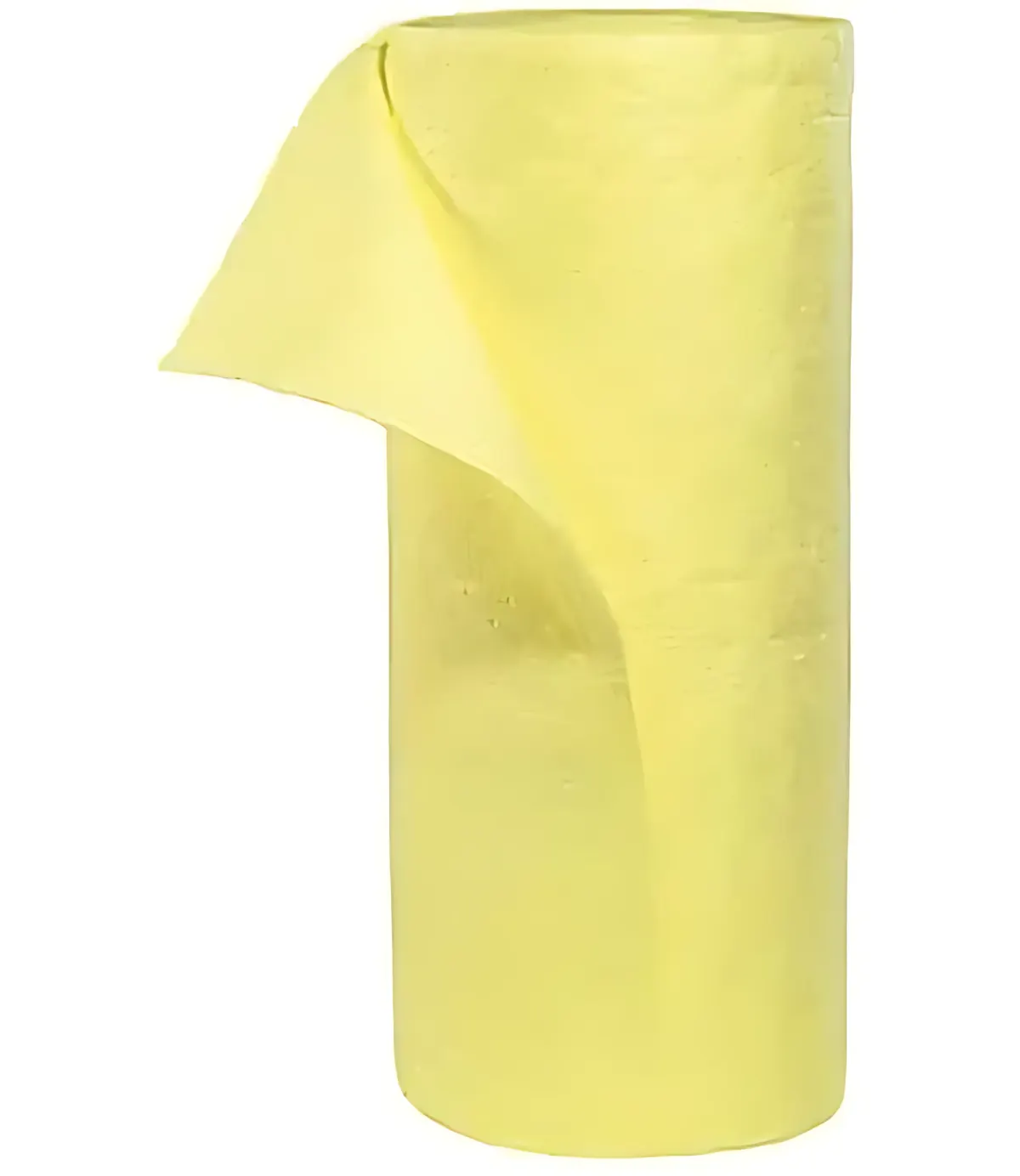
Chemical absorbents are the products a site hopes it will rarely use, and must be able to trust when it does. They sit in laboratories, chemical stores, battery rooms and hazmat kits, ready for acids, caustics, solvents and spills nobody can identify at first. For a distributor, the key questions are what the product can safely handle, how it is built and how it is packed.
This guide is for distributors, spill-kit assemblers and brand owners sourcing chemical absorbent pads, rolls, socks and pillows for their own label.
What chemical absorbents are
Our chemical sorbents are made from polypropylene, which is chemically inert: it absorbs and retains aggressive liquids without degrading, dissolving or triggering a reaction, even at high concentrations. They absorb up to 15 times their own weight in liquid. Hi-viz yellow is the industry standard colour, so responders can identify chemical absorbents at a glance.
What they handle
- Acids – sulphuric acid up to 98%, hydrochloric, nitric, phosphoric, acetic and chromic acid.
- Bases and caustics – sodium hydroxide 30%+, potassium hydroxide, ammonia and ammonium hydroxide, caustic cleaners, lime slurries.
- Solvents and fuels – acetone and MEK, toluene and xylene, methanol, ethanol and IPA, degreasers and thinners, brake and hydraulic fluids.
- Water-based liquids and unknowns – coolants and glycols, CIP cleaning agents, plating and rinse baths, battery electrolyte, and first response to unknown spills.
What they do not handle
Chemical absorbents are not recommended for hydrofluoric acid or strong oxidisers such as fuming nitric acid or oleum. Users should always test compatibility before deployment. Used absorbents take on the properties of the liquid they have absorbed, so they must be handled and disposed of as that liquid. Passing these points on to your customers protects them and you.
Choosing construction and format
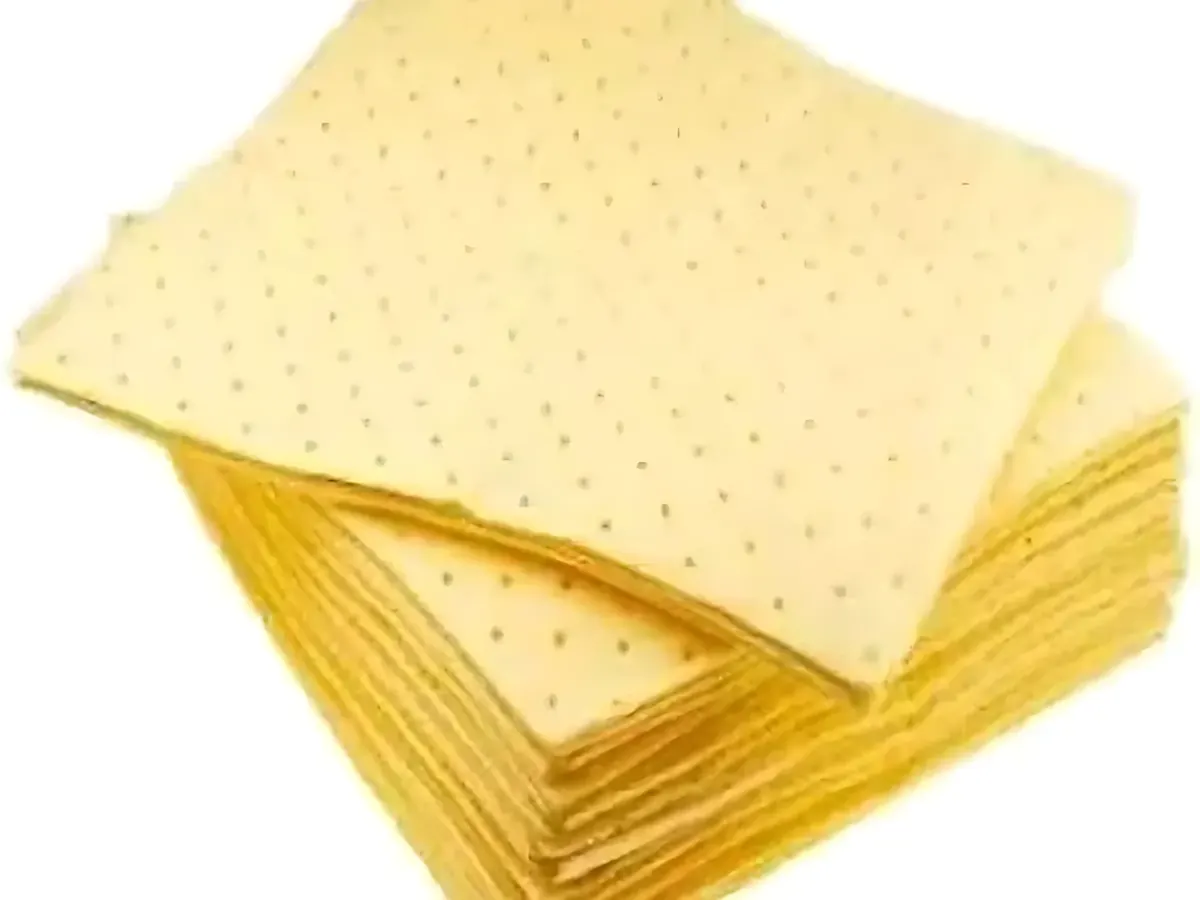
Pads and rolls come in seven constructions – Plain, SM, FM, SMS, SMF, FMF and Bonded – the same family as our oil-only and universal ranges. A spunbond face adds strength where pads are walked on; a fine-fibre face reduces lint on lab benches.
- Pads – lab benches and fume hoods, chemical storage and dip tanks, battery charging and plating lines, emergency spill kits.
- Rolls – chemical storage aisles, under drum racks and IBCs, transfer and decanting areas, walkways in process plants.
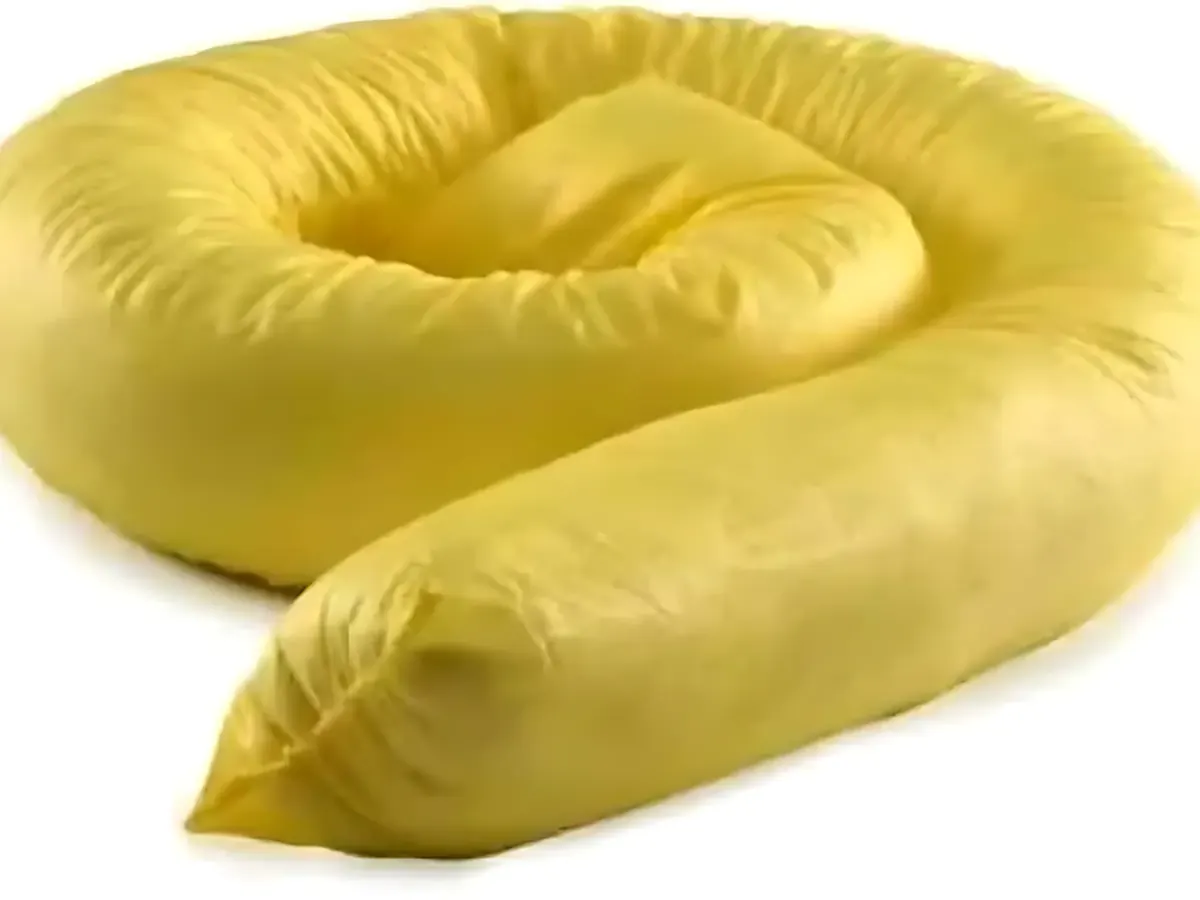
- Socks – diking spills at source, around drums, carboys and IBCs, drain protection during transfer.
- Pillows – dosing stations, drip pans and sumps, under leaking chemical valves, pits and bund corners.
What to agree in the specification
- Format and size – pad size, roll width and length, sock and pillow dimensions.
- Construction and weight – one of seven constructions and the gsm; fill weight for socks and pillows.
- Colour – yellow or custom.
- Print – printed spunbond face for your brand, if wanted.
- Packing – pieces per pack, plain polybag (standard) or printed polybags, cartons and labels at extra cost.
How to test samples
- Test with your customers' chemicals. Under controlled conditions, check that the sample absorbs the liquids in question and does not soften, swell or break down.
- Check speed and spreading. A good chemical pad takes up the spill quickly without letting it run across the surface.
- Lift it saturated. The pad must hold together when lifted for disposal.
- Check the colour. The yellow should be clear and consistent, so responders recognise it instantly.
Mistakes to avoid
- Promising "everything". No absorbent suits every chemical; state the exclusions on your packaging and data sheets.
- Mixing up colours. Keep yellow for chemical products only, so they are never confused with oil-only or universal absorbents.
- Forgetting disposal. Used absorbents take on the hazards of what they absorbed; tell users how to dispose of them.
What to ask a supplier
- Which chemicals is the product compatible with, and which not?
- Do you make the absorbent material yourself?
- Are socks and pillows sonic-welded, and filled to my weight?
- Can you pack under my brand?
- Can I combine chemical, universal and oil-only products in one container?
- Do you provide REACH and SVHC declarations for Europe?
How we supply chemical absorbents
Samridhi Crreation has manufactured nonwovens in India since 2004, with its own meltblown and spunbond lines. We supply distributors worldwide under their own brand (private label / OEM). The minimum order is one 40'HQ container, and 5–6 different products can be combined in it, so chemical pads can travel with universal rolls and oil-only booms. Standard packing is plain polybags; printed cartons are available on request at extra cost. We ship FOB India from Mundra or Nhava Sheva, with CIF and DAP on request, and provide REACH and SVHC declarations for customers in the European Union. Samples are free, and we pay the courier.
See the full compatibility list and formats on our chemical absorbents page, or send us your specification for a quotation and free samples.