
- Home
- Blog
- Flame-Retardant and Protective Workwear Fabrics: A Buyer's Guide to Fibres, Weaves and Finishes
Flame-Retardant and Protective Workwear Fabrics: A Buyer's Guide to Fibres, Weaves and Finishes
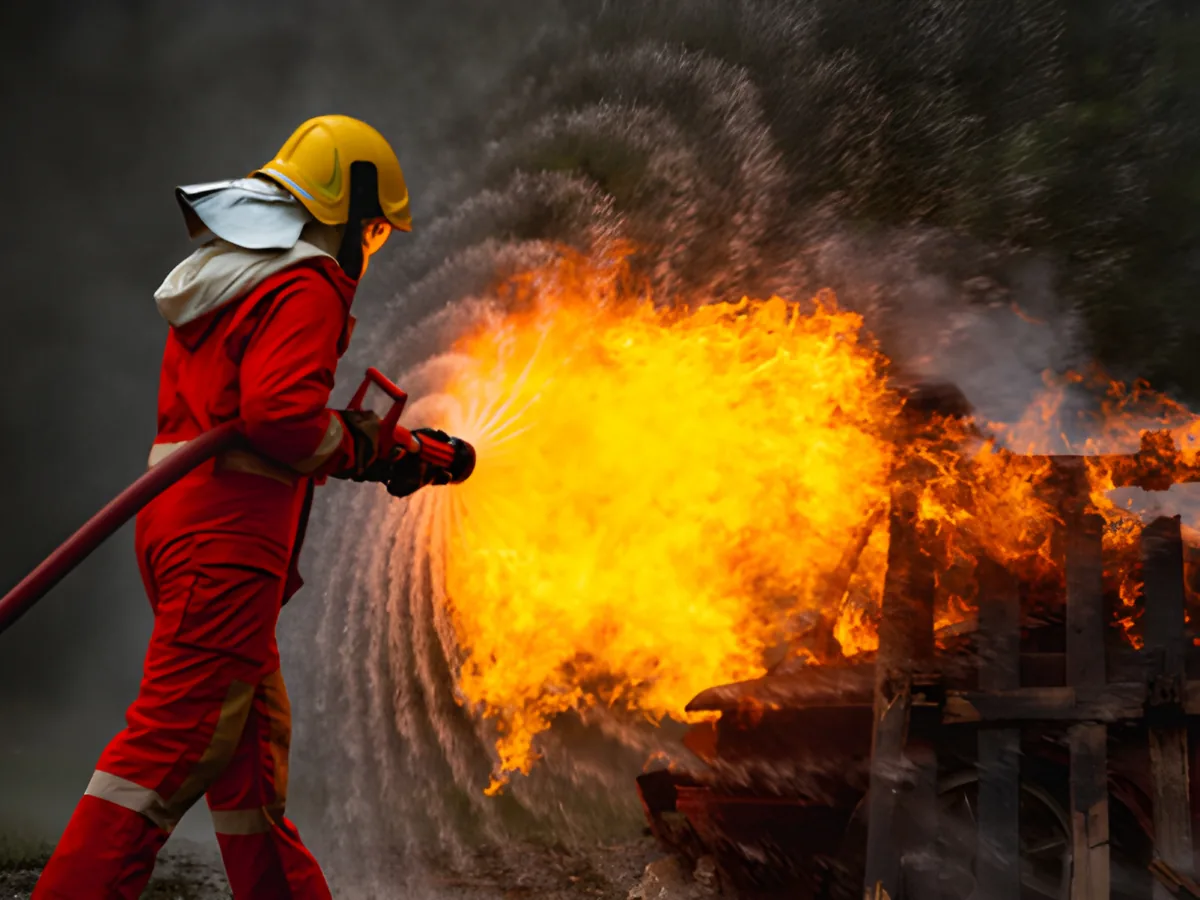
Protective clothing is only as good as the fabric it is cut from. A firefighter's turnout gear, an oil-and-gas coverall, a hi-vis jacket and a combat uniform each ask for a different combination of fibre, weave and finish. For garment makers and distributors, getting that combination right at the fabric stage avoids expensive problems later.
This guide is for workwear manufacturers, uniform suppliers and distributors buying woven technical textiles by the metre.
Fibres
The fibre sets the base protection and comfort. We weave:
- 100% cotton – comfortable and breathable; the base for many FR-finished fabrics.
- Polyester/cotton and cotton/nylon blends – stronger and more durable for everyday workwear.
- Inherently flame-resistant fibres – Protex, Teijin Conex meta-aramid, Kermel meta-aramid and Lenzing FR, where flame resistance must be built into the fibre.
- Steel and carbon fibre – for anti-static and conductive fabrics.
- Polyester/Tencel and cotton/Tencel – for softer, moisture-managing fabrics.
Weaves
The weave changes strength, feel and appearance. We weave plain, twill, ripstop, satin, Oxford, basket and herringbone. Twill is the classic workwear weave; ripstop adds a grid that stops tears from spreading; plain weaves are light and stable; herringbone and satin are used for uniforms and heavier garments.
Special finishes
Finishes add protection or comfort on top of the fibre. Available finishes include flame retardant, high visibility, chemical splash resistant, oil resistant, anti-bacterial, mosquito repellent, Teflon coated, anti-static, UV protective, moisture management and IR reflective, as well as camouflage and combat uniform fabrics. Several finishes can often be combined on one fabric; tell us the hazards the wearer faces and we will suggest the combination.

Where these fabrics are used
- Industrial protective clothing
- Firefighting and FR workwear
- Military and combat uniforms
- Hi-vis workwear
- Oil and gas coveralls
- Healthcare textiles
For disposable protective clothing rather than washable workwear, nonwoven fabrics are the usual choice: SMS for coveralls and gowns, and SSMMS where more fluid resistance is needed.
Capacity and widths
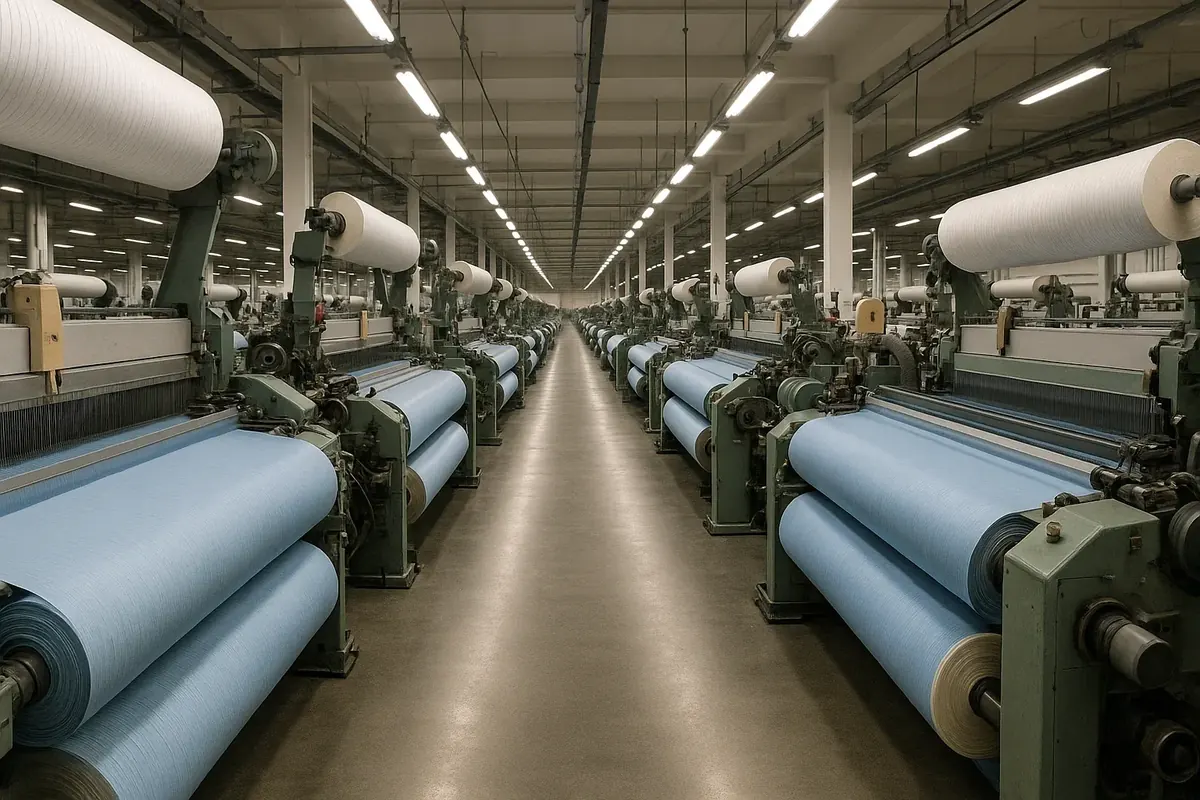
Our 350 high-speed water-jet and air-jet looms with dobby attachments weave technical fabrics up to 108 inches wide, with a capacity of 20 million metres a year. Wide widths help garment makers cut more efficiently and suit large-panel items.
How to write the specification
- Fibre or blend – and its percentage.
- Weave and weight – weave type and fabric weight.
- Width – up to 108 inches.
- Finishes – each finish required, and the performance your garment must reach.
- Colour – shade reference, including hi-vis colours or camouflage patterns.
- End use – the garment and the hazards it protects against.
Protective garments are tested and approved as finished products in each market. Plan your garment testing with the fabric you choose, and agree with us the fabric properties your tests depend on.
How to test samples
- Make up a garment. Cut and sew samples and test them as finished garments.
- Wash it. Check that finishes, colour and dimensions hold after repeated industrial washes.
- Wear it. Comfort decides whether workers actually wear protective clothing.
- Check consistency. Compare shade and weight between lots.
Mistakes to avoid
- Relying on a finish where the fibre should do the work. Some hazards call for inherently flame-resistant fibres.
- Ignoring wash durability. A finish that disappears after a few washes no longer protects.
- Forgetting comfort. Heavy, stiff fabric leads to garments left in the locker.
What to ask a supplier
- Do you weave in-house, and on which looms?
- Which FR fibres and blends can you supply?
- Which finishes can you apply, and can they be combined?
- What widths and capacities do you offer?
- Can I combine woven fabrics with other products in one container?
How we supply technical textiles
Samridhi Crreation has manufactured textiles in India since 2004, with 40+ years of textile experience behind the business, 350 high-speed looms and a 50,000 m² facility. We supply garment makers and distributors worldwide. The minimum order is one 40'HQ container, and 5–6 different products can be combined in it. We ship FOB India from Mundra or Nhava Sheva, with CIF and DAP on request, and provide REACH and SVHC declarations for customers in the European Union. Samples are free, and we pay the courier.
See fibres, weaves and finishes on our technical textiles page, or send us your specification for a quotation and samples.