
High-Temperature Insulation Felt: A Buyer's Guide to PPS, PAN, Aramid and PTFE Felts
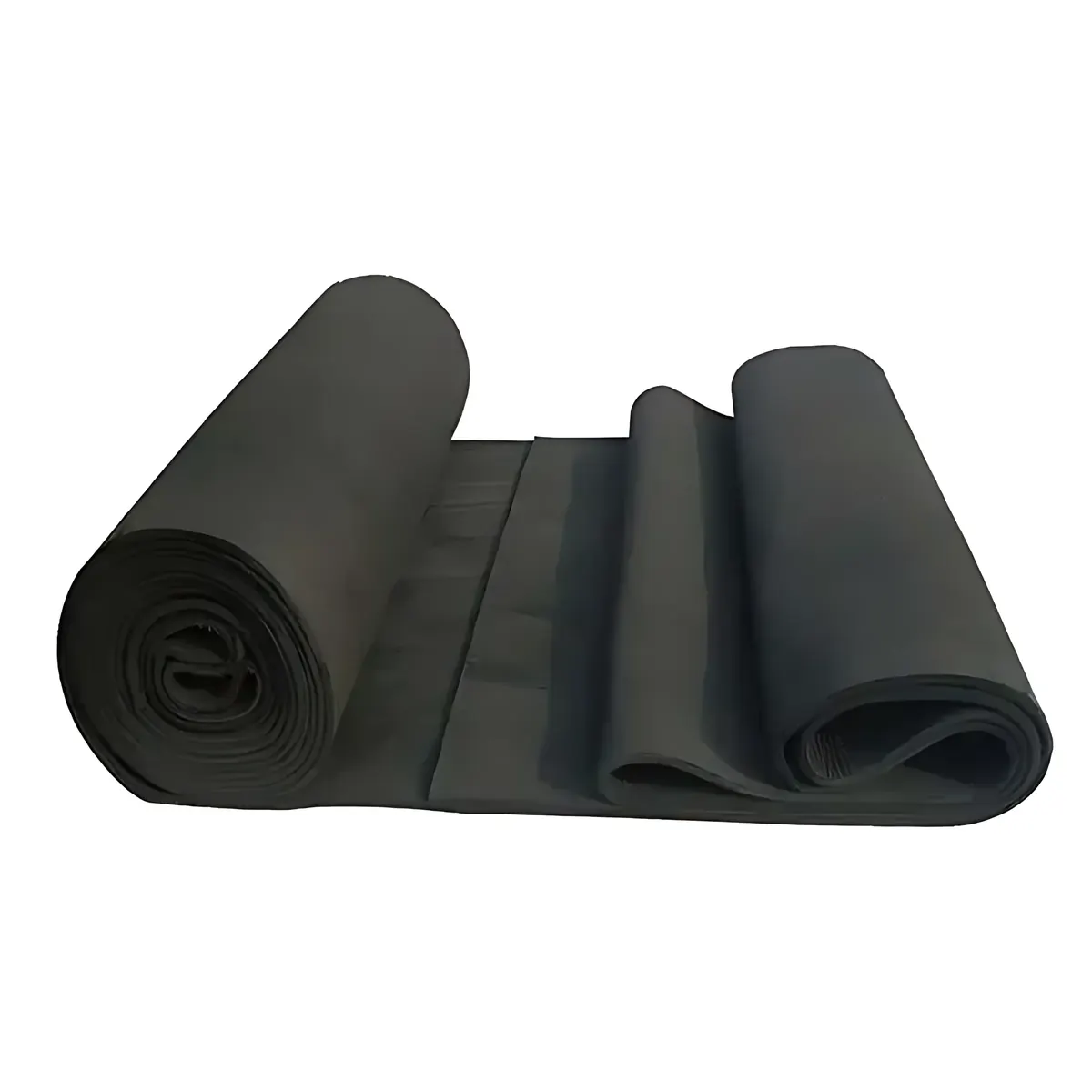
Insulation felts work in places most products never see: around engines and ovens, inside fire barriers, next to hot gas and aggressive chemicals. Choosing the felt is mostly a question of the fibre. Get the fibre right for the temperature and chemistry, and the felt lasts; get it wrong, and it shrinks, hardens or breaks down.
This guide is for insulation converters, OEMs and distributors buying insulation felts in rolls, sheets or cut parts.
How insulation felt is made
Our insulation felts are needle-punched: fibres chosen for the temperature, chemistry and mechanical load of the application are carded into a web and locked together by barbed needles, with no chemical binders. The trapped air in the felt structure gives thermal and acoustic insulation; the fibre decides how much heat, flame and chemical attack the felt can take.
Choosing the fibre
- PTFE felt – inert and hydrophobic, stable up to 260°C, flexible and durable; for the most chemically aggressive conditions.
- PPS felt – for high temperatures of 190–230°C, flame and chemical resistant and durable.
- Aramid felt (meta- and para-aramid) – heat and chemical resistant, lightweight, high strength and flame resistant.
- PAN felt – strong and stable, resistant to chemicals and oxidation, with low density.
- Polyamide (P-84) – heat and chemical resistant.
- Polyester, polypropylene and acrylic – for lower-temperature insulation where durability, low weight or chemical resistance matter more than heat.
Start from the highest temperature the felt will see, including peaks, then check the chemistry: moisture, acids, alkalis, oils. If two fibres both survive the temperature, the chemistry usually decides between them.
Finishes and support
- Mechanical finishes – singeing, glazing, calendering and heat setting, for surface quality and dimensional stability.
- Chemical treatments – water, oil and acid resistant, and PTFE treatments.
- Scrim support – for extra strength where the felt is cut, sewn or under load.
Where it is used
- Thermal insulation
- Acoustic insulation
- Aerospace and engine bays
- Fire barriers
- Industrial ovens and furnaces
- Hot-gas filtration
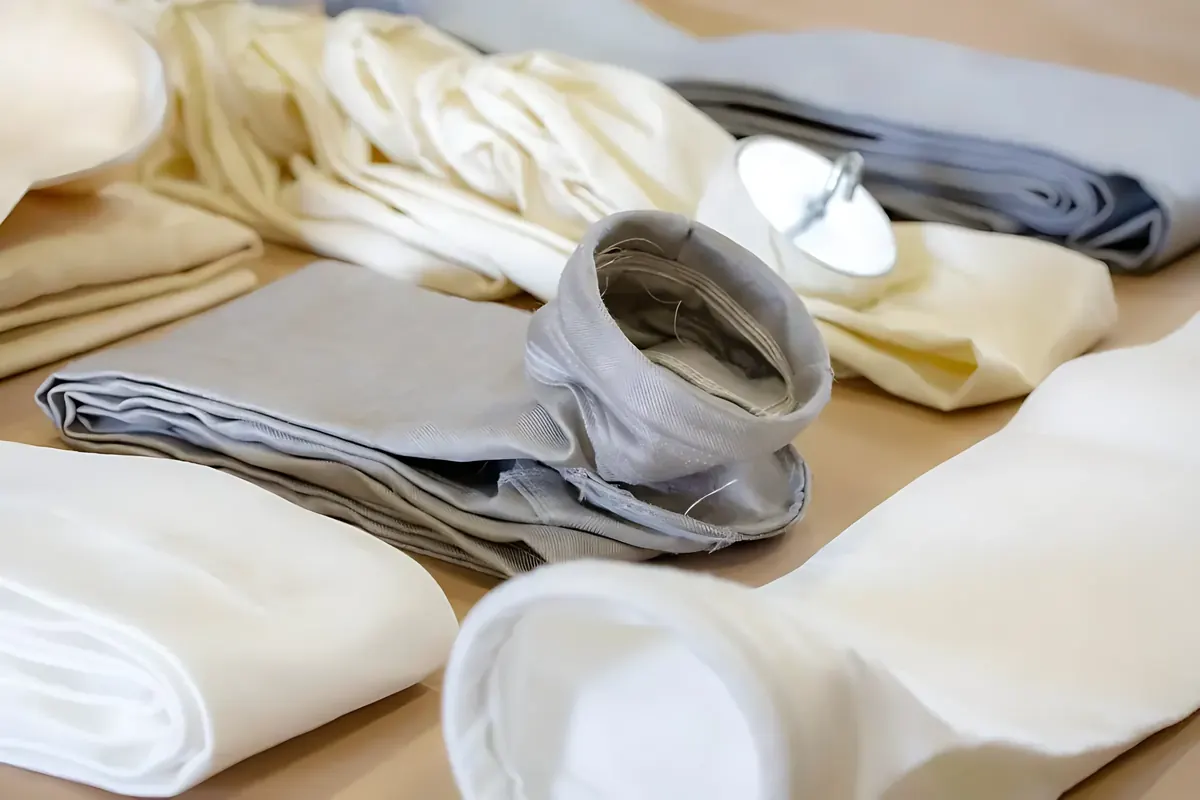
Many of the same fibres are used for hot-gas filter bags; if that is your application, see our dust bag filter media.
Thermal or acoustic?
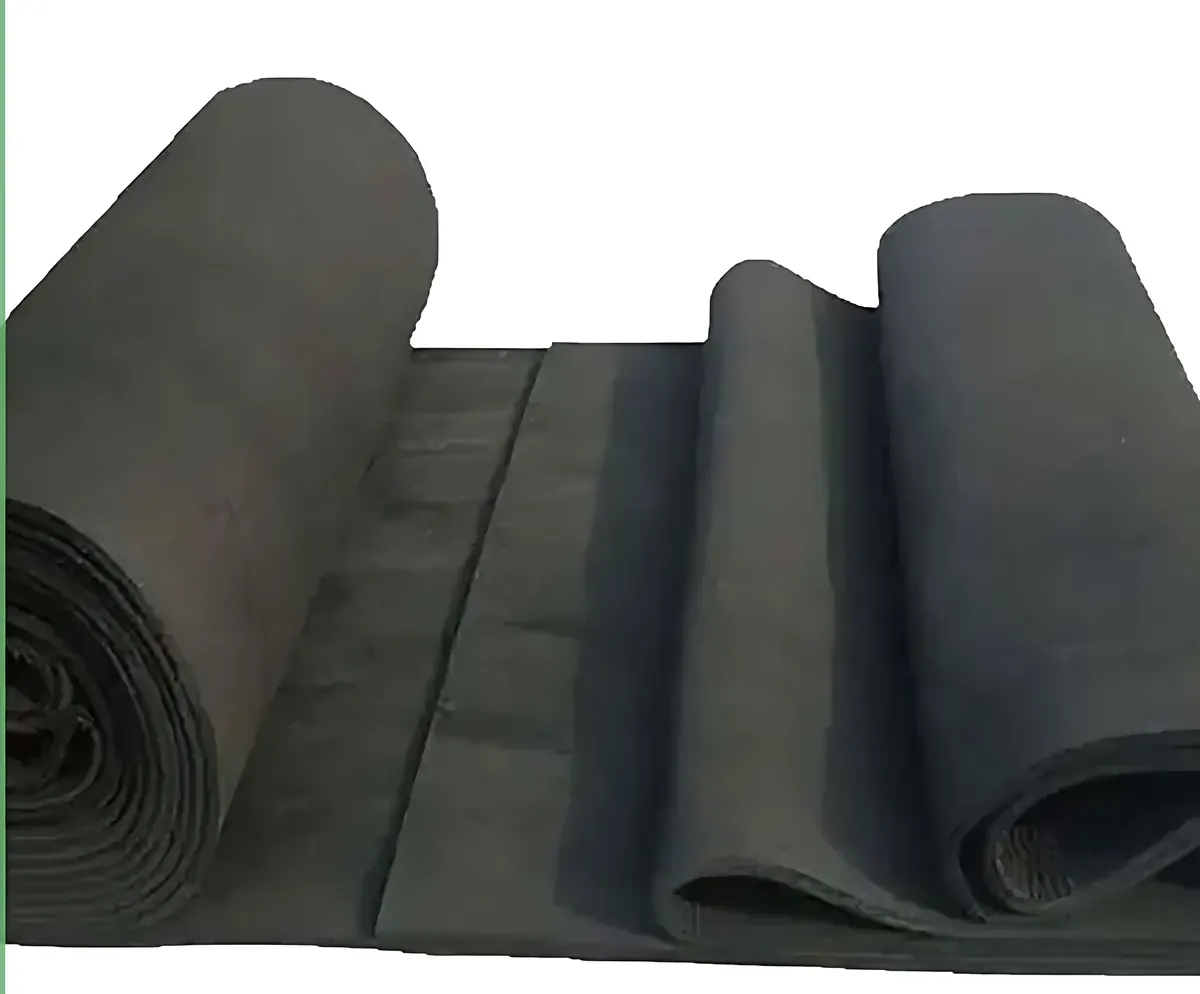
The same felt often does both jobs, but the priorities differ. For thermal insulation, the felt must hold its thickness and structure at temperature, because trapped air is what insulates; a felt that compresses or shrinks loses performance. For acoustic insulation, weight, thickness and density decide how well the felt absorbs sound, and the fibre matters mainly where heat or fire is also a risk, such as in engine bays. Tell us which job comes first, and whether the felt must also act as a fire barrier.
In fire barriers, the fibre's flame behaviour is the deciding factor. Aramid, PAN and PPS felts are chosen there for their flame resistance; the finished barrier is then tested as part of your product.
How to write the specification
- Fibre – single fibre or blend.
- Weight and thickness – gsm and target thickness; density follows from both.
- Finish and scrim – as needed.
- Format – rolls, sheets or cut parts, with sizes.
- Conditions – maximum and continuous temperature, chemicals, moisture and mechanical load.
How to test samples
- Heat-age it. Hold samples at the working temperature and check for shrinkage, hardening or colour change.
- Expose it. Test against the chemicals and moisture it will meet.
- Fit it. Cut, sew or mould samples the way your product is made.
- Measure it. Compare thickness and weight with your specification across several pieces.
Mistakes to avoid
- Designing to the average temperature. Peaks damage felt; design to the maximum.
- Paying for more fibre than you need. PTFE is not needed where PPS or aramid does the job.
- Ignoring shrinkage. Heat-set felt where dimensions matter.
What to ask a supplier
- Do you needle-punch the felt in-house?
- Which high-temperature fibres can you run?
- Which finishes and scrims are available?
- Can you supply sheets and cut parts as well as rolls?
- Can I combine insulation felt with other products in one container?
How we supply insulation felt
Samridhi Crreation has manufactured nonwovens in India since 2004, on its own needle-punch, spunbond, meltblown, SMS/SSMMS, spunlace and hot-air-through lines. We supply converters and distributors worldwide. The minimum order is one 40'HQ container, and 5–6 different products can be combined in it. We ship FOB India from Mundra or Nhava Sheva, with CIF and DAP on request, and provide REACH and SVHC declarations for customers in the European Union. Samples are free, and we pay the courier.
See fibres and temperature ranges on our insulation materials page, or send us your conditions for a recommendation and samples.