

Meltblown Nonwoven Fabric: A Buyer's Guide to Polymers, Grades and Applications
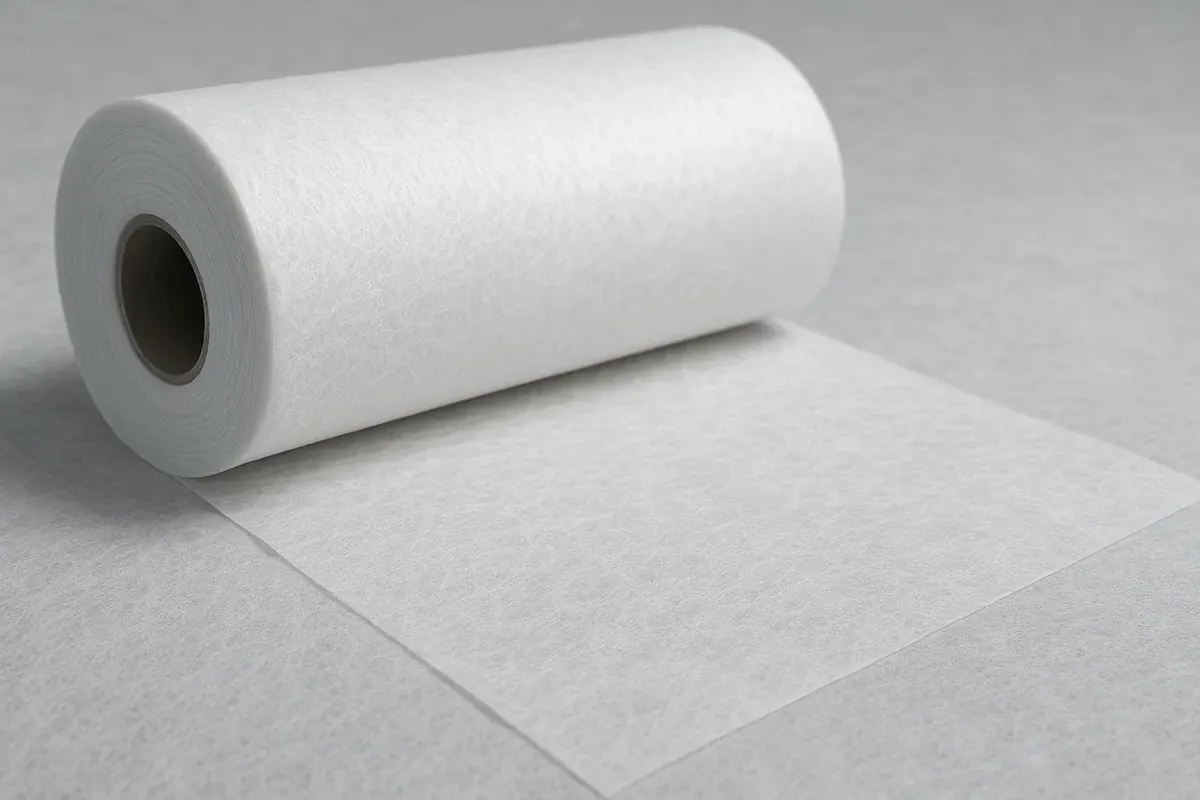
Meltblown is the fine-fibre layer that does the hard work inside many products: it catches particles in a face mask or an air filter, and it soaks up oil in a spill pad. It is rarely seen by the end user, but its quality decides how well the finished product performs.
This guide is for filter makers, mask and respirator converters, sorbent manufacturers and distributors buying meltblown nonwoven fabric in rolls. It explains how meltblown is made, which polymer and treatment to choose, and what to agree with a manufacturer.
How meltblown is made
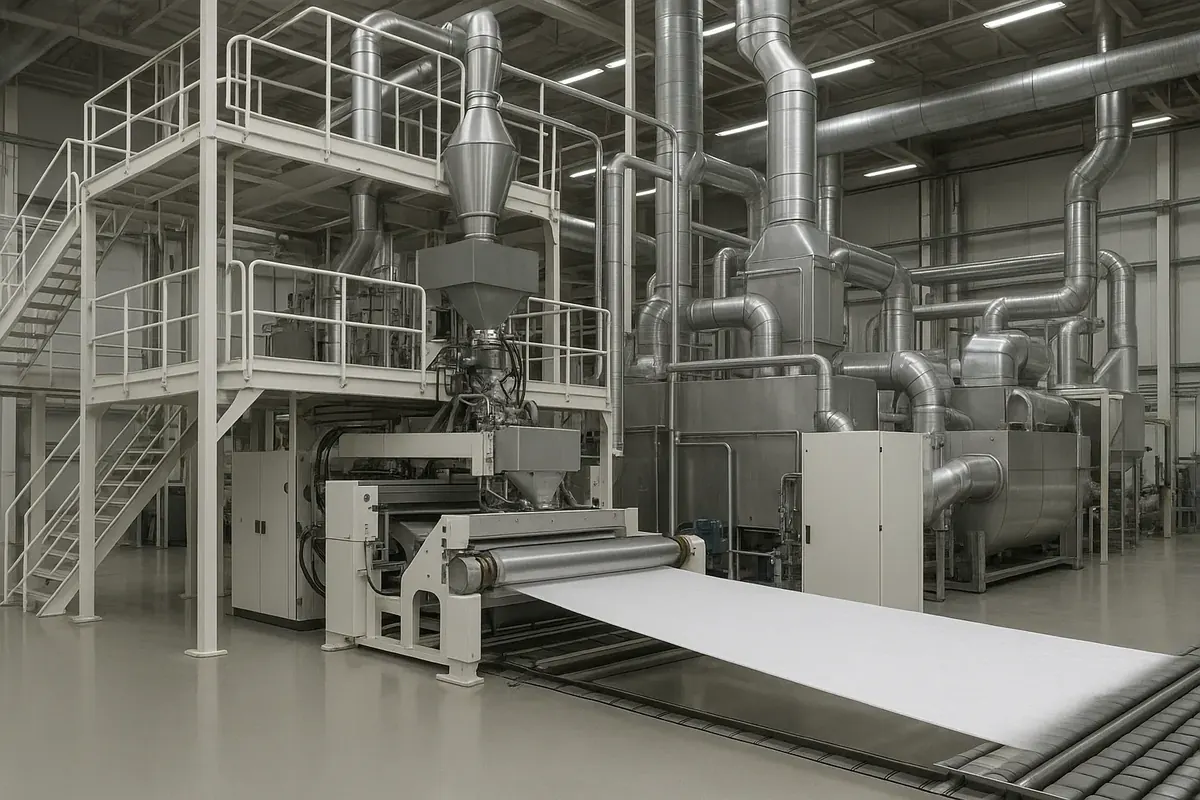
Molten polymer is pushed through microscopic nozzles and stretched by high-velocity hot air. The fibres that land on the collector are under 10 microns across – finer than a human hair – and form a uniform web. That fine, dense structure gives meltblown its filtration efficiency and its large internal surface for absorbing liquid.
Choosing the polymer
- Polypropylene (PP) – the most common meltblown polymer, used for masks, air filtration and sorbents.
- Polyester (PET) – for filtration where the media must handle higher temperatures or specific liquids.
- PBT – used in specialised liquid filtration.
Filtration grades and treatments
For air filtration, meltblown is usually electrostatically charged, so the fibres attract and hold particles far smaller than the gaps between them. Our filtration media is made for N90–N99 and FFP1–FFP3 respirators, ASTM level 1–3 medical masks, and for pollen, fuel, engine, hydraulic, room-air, vacuum, liquid and HVAC filters. Other treatments – hydrophilic or oleophilic – change how the web behaves with liquids.
Filter media is made to order to your specification; there are no stock grades. Tell us the end product, the target performance and how the media will be combined with other layers, and we will set up the grade.
Sorbent grades
The same meltblown process makes the absorbent core of spill-control products. Oil-only grades are oleophilic and hydrophobic and hold up to 15 times their own weight in oil; universal grades take up oils and water-based liquids alike. We use these webs in our own oil absorbents and universal absorbents, and also supply them as rolls for buyers who convert or laminate in-house.
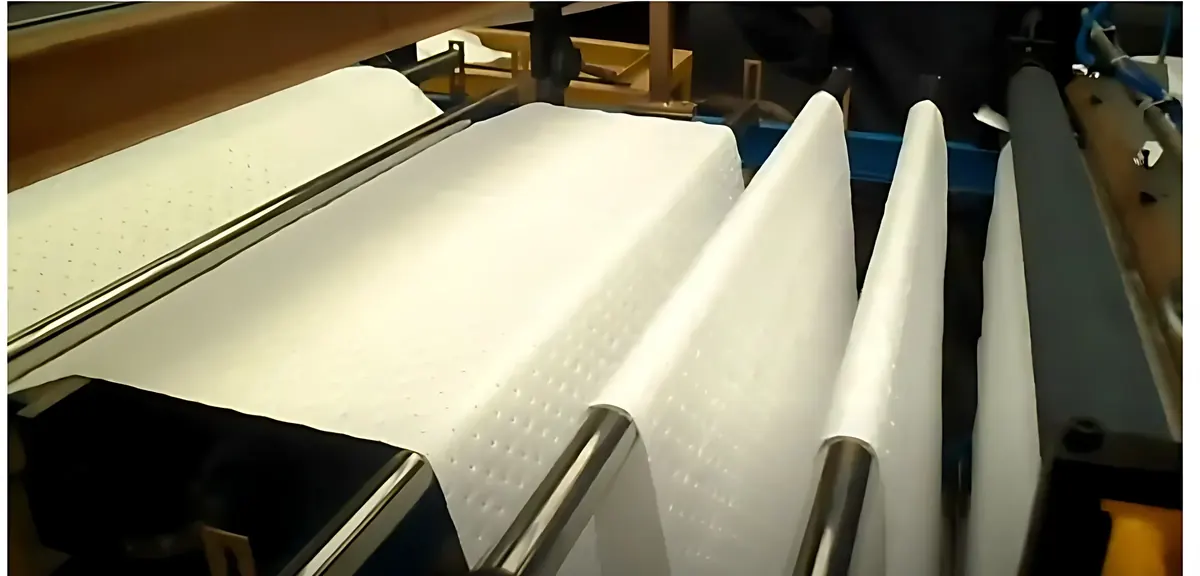
Where it is used
- Respirators and medical masks
- HVAC and room-air filters
- Liquid and hydraulic filtration
- Fuel and engine filters
- Vacuum cleaner bags
- Oil and universal sorbents
How to test samples before ordering
Meltblown is always one layer of a finished product, so test it in that product, not only on its own:
- For filtration – build the full filter or mask with the sample and test it the way your customers will, including the layers it will be laminated or combined with.
- For sorbents – compare how fast and how much the sample absorbs against your current material, with the liquids your customers use.
- Weight and evenness – weigh pieces from across the roll width; thin spots weaken both filtration and absorbency.
- Handling – check how the web unwinds, slits and laminates on your line.
Mistakes to avoid
- Treating all meltblown as the same. A sorbent grade and a filtration grade are made very differently; say clearly what the media is for.
- Specifying only gsm. For filtration, agree the performance target with the supplier; weight alone does not tell you how a media filters.
- Skipping the combined test. A media that works alone can behave differently once laminated to a spunbond cover; test the finished build.
What to ask a supplier
- Do you run your own meltblown lines?
- Which polymers can you make – PP, PET, PBT?
- Can you make filtration media to my target performance, and electrostatically charge it?
- For sorbents: do you offer oil-only and universal grades?
- Can you slit to my width and wind to my roll length?
- What is the minimum order, and can I combine meltblown with other products in one container?
How we supply meltblown
Samridhi Crreation has manufactured nonwovens in India since 2004 and runs its own meltblown, spunbond, SMS/SSMMS, needle-punch, spunlace and hot-air-through lines. Our filter media is synthetic only – no glass-fibre media – and made to the customer's specification. Rolls are slit to width. The minimum order is one 40'HQ container, and 5–6 different products can be combined in it, for example meltblown with PP spunbond cover fabric. We ship FOB India from Mundra or Nhava Sheva, with CIF and DAP on request, and provide REACH and SVHC declarations for customers in the European Union. Samples are free, and we pay the courier.
See polymers, grades and treatments on our meltblown nonwoven page, or send us your specification for a quotation and samples.