
PET and Nylon Spunbond Nonwoven: A Buyer's Guide to Polymers, Weights and Specifications
Polypropylene spunbond covers most everyday nonwoven uses. When a product has to carry load, survive heat in coating or lamination, bond to bitumen or be welded and formed, buyers move to polyester (PET) or nylon 6 spunbond. These are technical fabrics, and small differences in specification show up later as line problems, weak laminates or rejected batches.
This guide is for converters, laminators, filter makers and distributors sourcing PET and nylon spunbond in rolls. It explains what the two polymers offer, how to set the specification and what to agree with a manufacturer before ordering.
What PET and nylon spunbond are
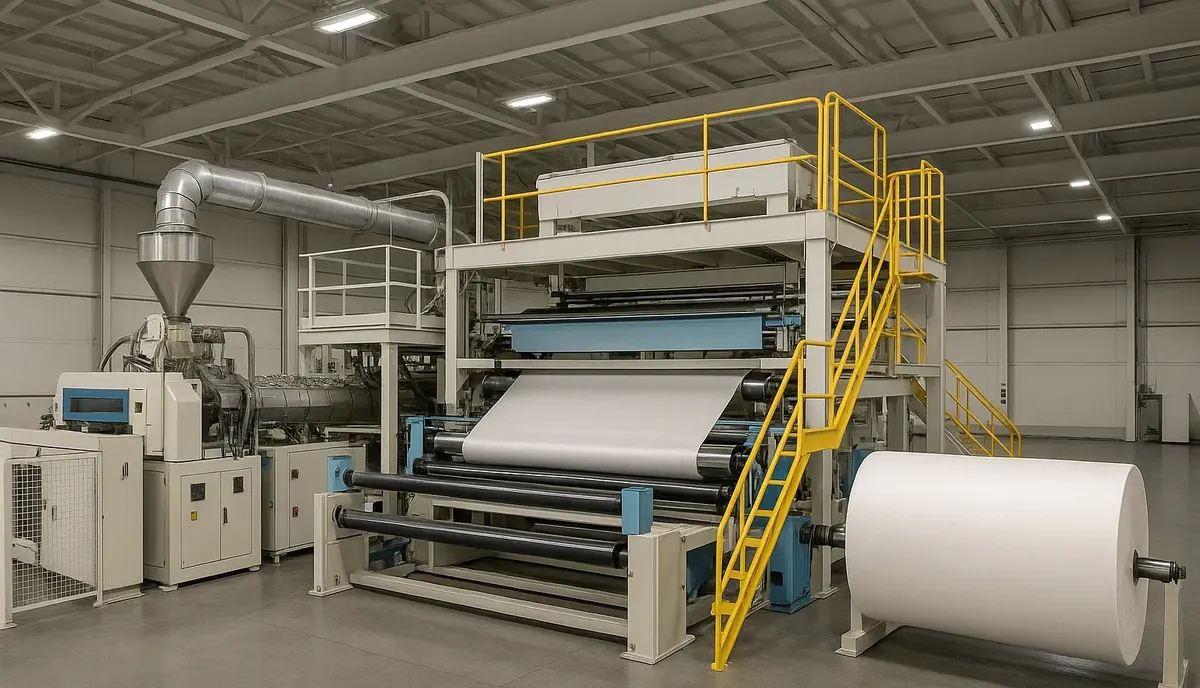
Spunbond is made by extruding continuous filaments, laying them as a web and bonding them, here by flat calender or point bonding. Because the filaments are continuous, the fabric has a high strength-to-weight ratio and clean, non-fraying edges when slit. Our PET and nylon 6 spunbond is made from 5 to 150 gsm and supplied in rolls slit to the width you need.
Compared with polypropylene, PET and nylon hold their dimensions better through heat. That is why they are chosen as a base for coating, lamination and composites, and why they weld ultrasonically and thermoform without fraying.
PET or nylon 6?
Both polymers give a strong, heat-resistant web. The right one depends on the end use and the process it goes through:
- Polyester (PET) – the usual choice for roofing and bitumen membranes, filtration media, carpet backing, landscaping fabrics and automotive parts, where strength, heat resistance and good bitumen adhesion matter.
- Nylon 6 (PA6) – for applications where the customer's process or end product calls for polyamide.
If you are unsure, tell us the application, the process (coating, lamination, welding, moulding) and any temperature it sees. We will recommend the polymer and weight, then make it to your specification.
Where it is used
- Filtration media and pleated filters
- Automotive interiors and trunk liners
- Roofing and bitumen membranes
- Footwear and leather goods
- Carpet backing
- Landscaping and geotextiles
- Cable wrap tapes
For filtration programmes, PET spunbond often works as the support or cover layer next to a finer media such as meltblown. For automotive and filter applications, see also our automotive filtration media.
How to write the specification
A good specification makes quotations comparable and keeps every reorder the same. Agree these points for each grade:
- Polymer – PET or nylon 6.
- Basis weight – in gsm, anywhere from 5 to 150 gsm.
- Bonding – flat calender (smooth, closed surface) or point bonded (softer, more open).
- Width and roll length – slit width, roll length or diameter, and core size.
- Colour and finish – natural white or a colour; any finish your process needs.
- Process – what happens next (coating, bitumen, welding, thermoforming), so the grade is set up for it.
How to test samples before ordering
Lab data helps, but the real test is your own process. Run trial rolls on your line at normal speed and check what matters for your product:
- Weight and evenness – weigh cut samples from the left, centre and right of the roll; an even web gives even coating and lamination.
- Strength – compare tensile strength in both machine and cross direction with the fabric you use today.
- Behaviour in your process – how it takes bitumen or coating, how it welds and forms, and whether it shrinks or curls with heat.
- Slitting and winding – clean edges, straight roll sides, correct core and length.
Mistakes to avoid
- Buying on gsm alone. Two fabrics of the same weight can behave very differently in coating or welding. Agree the bonding type and test in your process.
- Switching polymer without a trial. Moving from PP to PET, or PET to nylon, changes heat behaviour and adhesion; always run a trial first.
- Forgetting the roll format. Wrong core size or roll diameter can stop a line as surely as wrong fabric. Put them in the specification.
What to ask a supplier
- Do you run your own spunbond lines, or trade fabric from others?
- Which weights can you make in PET and in nylon 6?
- Flat calender or point bonding: which do you recommend for my process?
- Can you slit to my width and wind to my roll length and core?
- Can you send trial rolls so we can run them on our line before a container order?
- What is the minimum order, and can I combine PET spunbond with other fabrics in the same container?
- Which shipping terms do you offer, and do you provide REACH and SVHC declarations for Europe?
How we supply PET and nylon spunbond
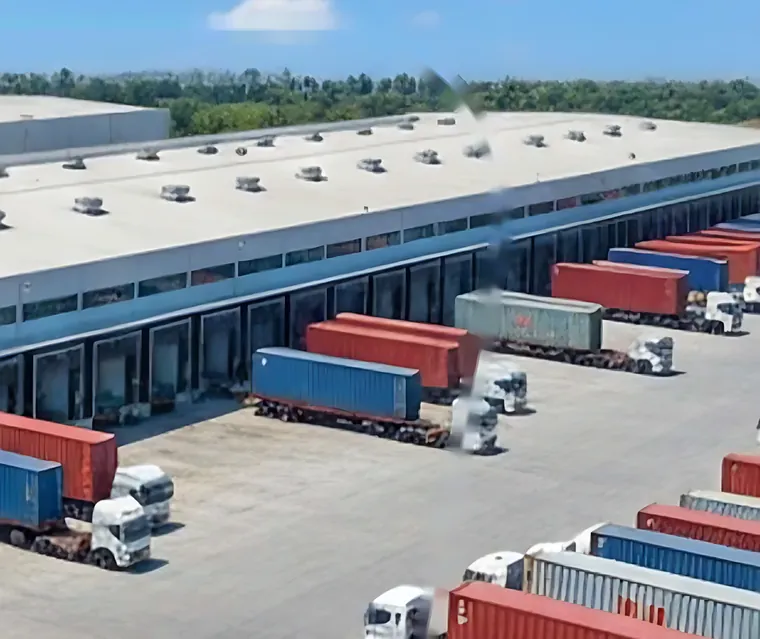
Samridhi Crreation has manufactured nonwovens in India since 2004 and runs its own spunbond, meltblown, SMS, needle-punch, spunlace and hot-air-through lines. We supply converters and distributors worldwide, including under their own brand. The minimum order is one 40'HQ container, and 5–6 different products can be combined in it, so PET spunbond can travel with PP spunbond or other fabrics. We ship FOB India from Mundra or Nhava Sheva, with CIF and DAP on request, and provide REACH and SVHC declarations for customers in the European Union. Samples are free, and we pay the courier.
See weights, bonding and applications on our PET and nylon spunbond page, or send us your specification for a quotation and samples.