

SSMMS Nonwoven Fabric: A Buyer's Guide for Medical and Hygiene Converters
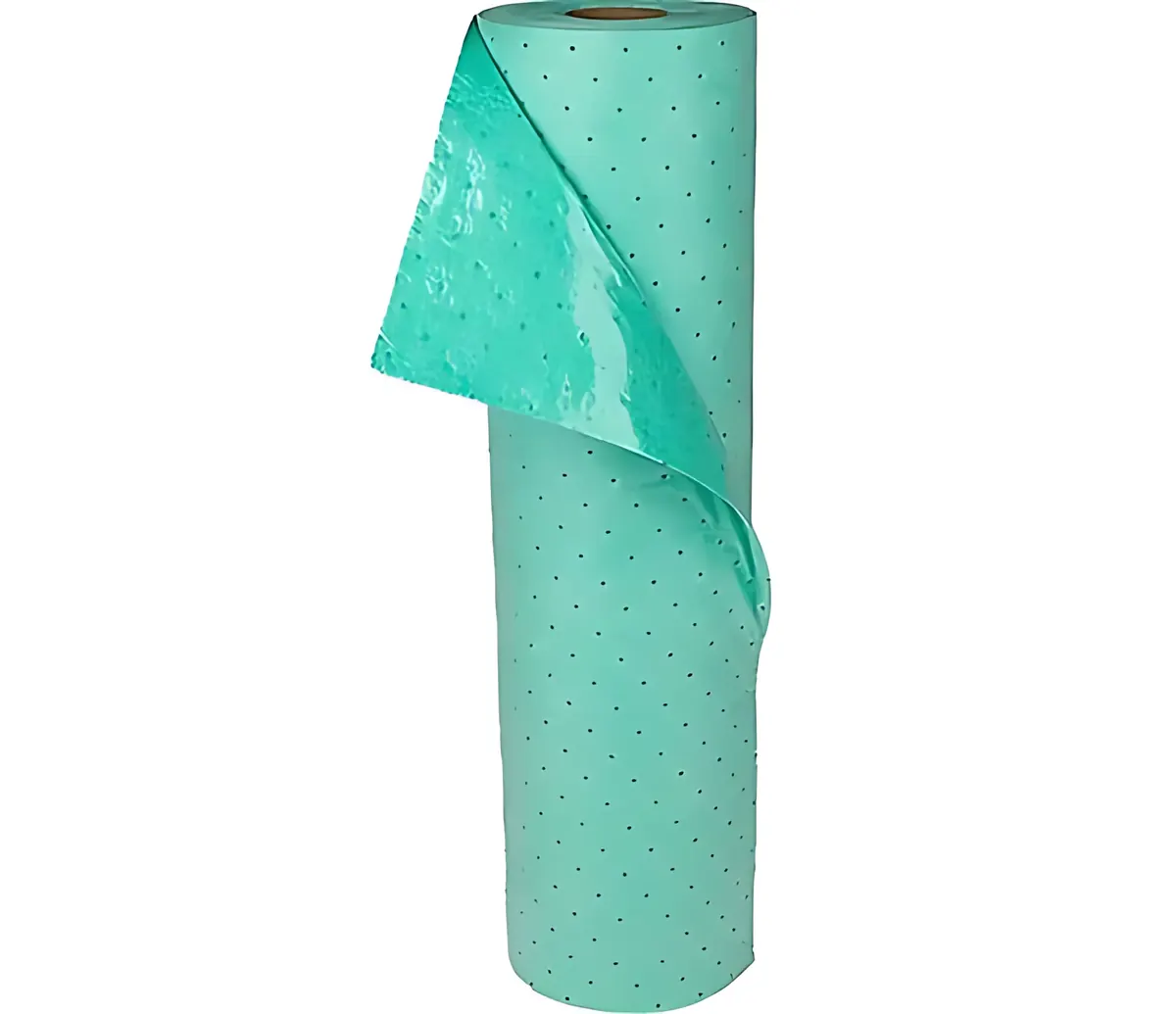
When a surgical gown, sterile wrap or medical kit needs more protection than standard SMS, converters move to SSMMS. It is the five-layer version of the same idea: more spunbond for strength and softness, and a double meltblown barrier against fluids. Choosing it, and specifying it correctly, is one of the main decisions for any medical nonwoven programme.
This guide is for medical and hygiene converters, and the distributors who supply them, buying SSMMS nonwoven fabric in rolls.
What SSMMS is
SSMMS is made on a five-beam line: spunbond, spunbond, meltblown, meltblown, spunbond, bonded into one fabric. Compared with three-layer SMS, the second spunbond layer adds strength and a softer feel, and the second meltblown layer gives better fluid resistance and higher barrier protection, all at a uniform weight. The fabric is 100% polypropylene.
Our SSMMS is produced on fully automated Reicofil lines with robotic packing, so the fabric is handled as little as possible between the line and your warehouse. Medical blue and green are standard; custom colours are possible.
SSMMS or SMS?
Both fabrics have a meltblown barrier between spunbond faces. The difference is how much protection and comfort the end product needs:
- SMS (3 layers) – strong and durable, with a good balance of strength and filtration. Used for diapers, basic surgical gowns, drapes and wraps.
- SSMMS (5 layers) – higher protection, better fluid resistance and a softer feel. Used for reinforced surgical gowns, sterile wraps and medical kits, and wherever wearers spend long hours in the fabric.
Many converters buy both: SSMMS for the critical zones and products, and SMS for the rest. Because both can travel in the same container, a mixed order is simple.
Where SSMMS is used
- Reinforced surgical gowns
- Sterile wraps
- Medical kits
- Drapes and covers
- Hygiene products
- Medical sheets for hospital sterile services departments (CSSD)
How to write the specification
- Weight – the gsm of the finished fabric.
- Colour – medical blue, green or a custom colour.
- Width and roll – slit width, roll length or diameter, and core size to suit your cutting and folding lines.
- End use – gown, wrap, drape, kit or sheet, so the fabric is set up for it.
- Packing – how rolls are wrapped and labelled for your warehouse.
We supply the fabric, not the finished medical product. The company that makes and sells the gown, wrap or kit is responsible for its testing and approvals in each market, so build time for your own product tests into the programme.
How to test samples
- Barrier in use – make up a sample gown or wrap and test it the way it will be used, including folds and seams.
- Comfort – compare softness and drape with your current fabric, especially for gowns worn through long procedures.
- Strength – check tear and tensile strength in both directions.
- Evenness – weigh pieces across the width; even weight means even protection.
- Converting – run a trial roll through your cutting, sealing and folding machines.
Mistakes to avoid
- Choosing on gsm alone. An SMS and an SSMMS of the same weight behave differently; agree the construction.
- Skipping your own product tests. Fabric data does not replace testing the finished product.
- Forgetting colour consistency. Agree a colour reference so every reorder matches.
What to ask a supplier
- Do you make SSMMS on your own five-beam lines?
- How is the fabric handled and packed to keep it clean?
- Which weights and colours can you supply?
- Can you slit and wind to my machines?
- Can I combine SSMMS, SMS and spunbond in one container?
- Do you send samples for my own product testing?
How we supply SSMMS
Samridhi Crreation has manufactured nonwovens in India since 2004, on its own spunbond, meltblown, SMS/SSMMS, needle-punch, spunlace and hot-air-through lines, with fully automated manufacturing. We supply converters and distributors worldwide. The minimum order is one 40'HQ container, and 5–6 different products can be combined in it. We ship FOB India from Mundra or Nhava Sheva, with CIF and DAP on request, and provide REACH and SVHC declarations for customers in the European Union. Samples are free, and we pay the courier.
See the layer structure and applications on our SSMMS nonwoven page, compare it with PP spunbond, or send us your specification for a quotation and samples.