
Absorbent Booms vs Socks: A Buyer's Guide to Containing Oil and Chemical Spills
Also available in: Deutsch · Français · Español · Italiano · Nederlands · Polski · Čeština · Svenska · Norsk · Suomi · Русский · Türkçe · 日本語 · 简体中文
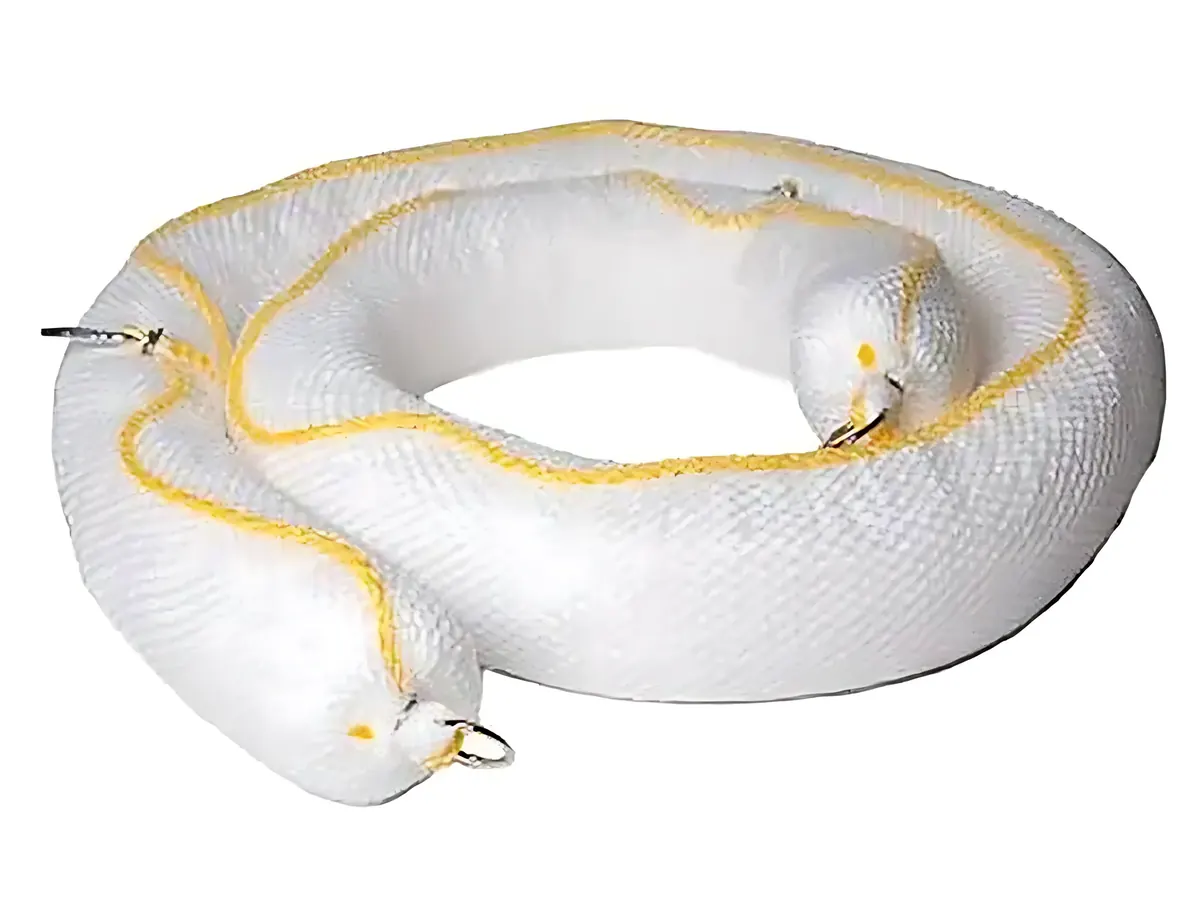
Booms and socks look alike: both are long tubes filled with absorbent. Buyers often use the words for the same thing, and some catalogues do too. But they do different jobs, in different places, and ordering the wrong one is a common reason a spill kit or a spill response does not work as planned.
This guide is for distributors, spill-kit assemblers and safety buyers. It explains what each product is for, how to choose between them, what to put in the specification, and what to ask a manufacturer.
The short answer
- Booms are for oil on water. They float, repel water, absorb only the oil, and are linked end to end to ring a spill on a pond, a harbour, a drain channel or a river.
- Socks are for spills on land. They are smaller and flexible, and are laid around a leak, a machine base or a drain to stop the liquid spreading while pads and pillows soak it up.
Absorbent booms
An absorbent boom is a tube of oil-only absorbent, usually polypropylene, inside a strong outer netting. The netting carries the load when the boom is towed, lifted and recovered, and end fittings link one boom to the next, so a line of booms can be as long as the spill needs.
Because the filling is oil-only, the boom floats and keeps absorbing oil even when it sits in water. That is the whole point: a boom that soaked up water would sink and stop working.
Typical places booms are used:
- Ports, harbours, marinas and waterways.
- Ponds, interceptors and drainage channels on industrial sites.
- Fuel stations and depots with open water nearby.
- As a standby around refuelling or transfer operations near water.
After the booms have contained the spill, oil-only pads or sweeps are often used inside the ring to pick up the thin sheen that remains.
Absorbent socks
A sock is a smaller, flexible tube that bends around corners, pipes and machine feet. It does not need netting for towing, because it is used on floors and the ground, not on open water. Socks are the workhorse of most spill kits: they make a quick barrier, and pads or pillows do the absorbing inside it.
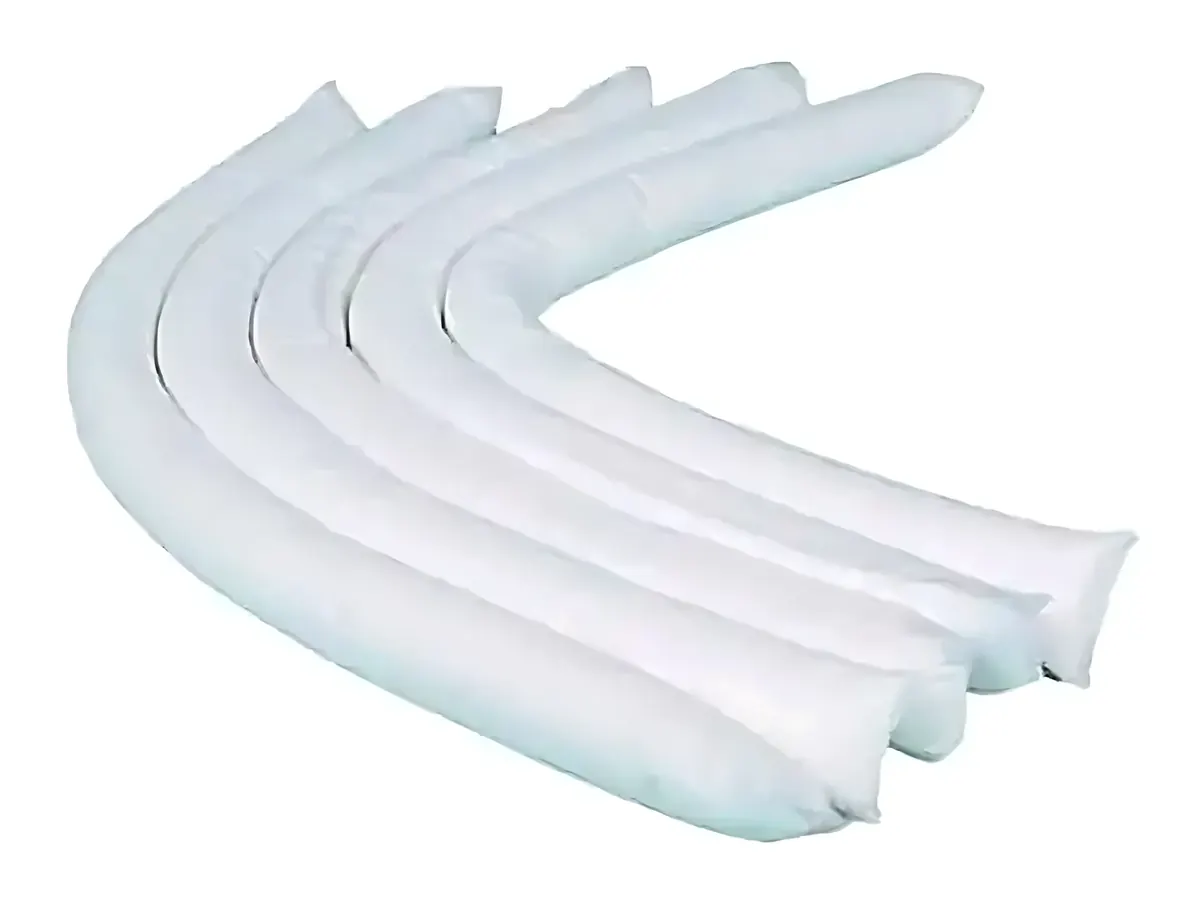
Socks come in the same three families as pads and rolls, so choose by the liquid:
- Oil-only socks (usually white): for oils and fuels; they repel water, so they also work outdoors in the rain.
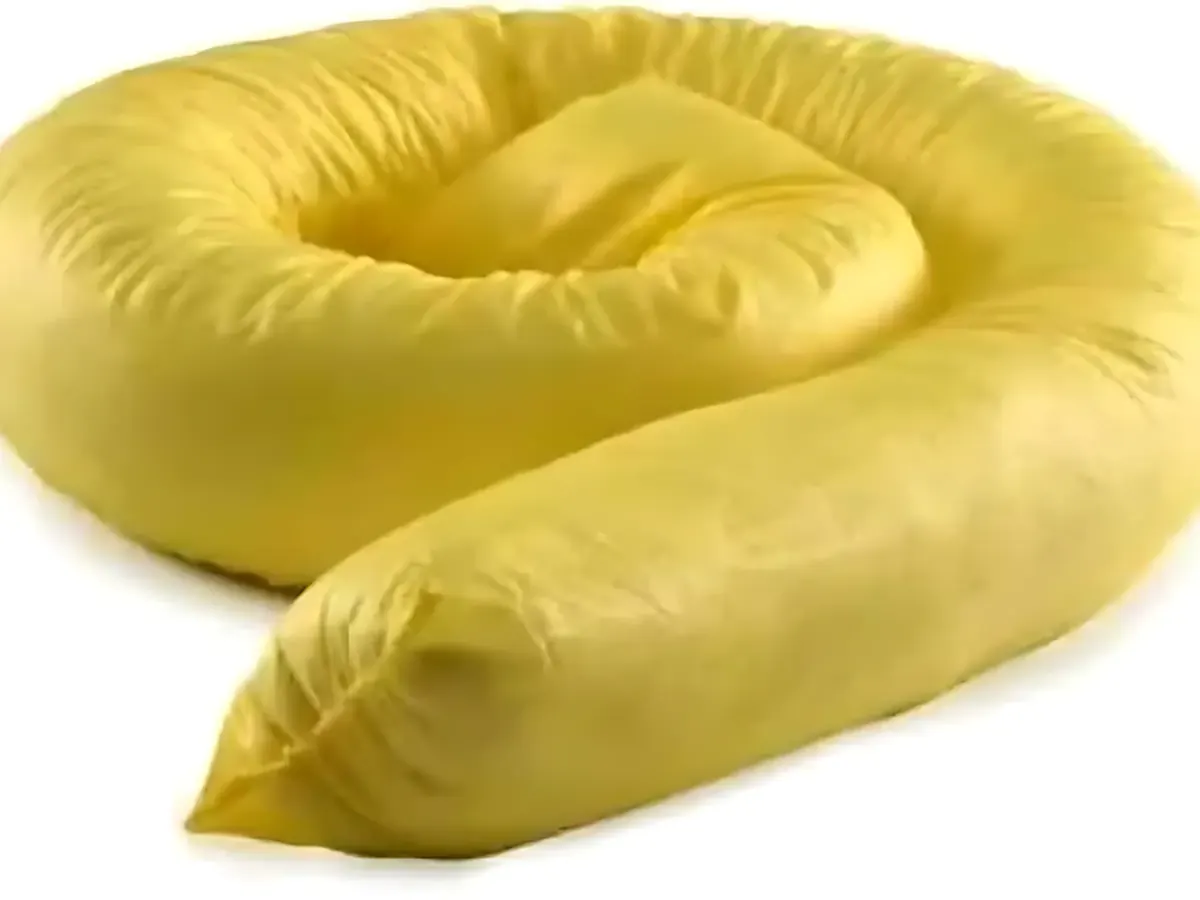
- Chemical socks (usually yellow): chemically inert, for acids, bases, solvents and unknown liquids.
- Universal socks (usually grey): for oils, coolants, solvents and water-based fluids in workshops and plants.
Boom or sock? Five questions
- Is the spill on water or on land? Water means booms; land means socks.
- What is the liquid? Oil and fuel only: oil-only booms or socks. Chemicals: chemical socks. Mixed fluids in a workshop: universal socks.
- How big is the area? Booms link into long lines for large spills; socks are best for small and medium spills around equipment.
- Will it be towed or lifted? If yes, it needs a boom with strong netting and end fittings.
- Who will use it? Socks are easy for anyone on site; booms on water usually need a trained response team.
What to put in the specification
- Type: oil-only, chemical or universal.
- Filling: the absorbent material and how densely it is filled.
- Diameter and length: matched to the spills you expect and to the kit or container it must fit in.
- Outer cover: for socks, the fabric skin; for booms, the netting and its strength.
- Fittings: for booms, the end connectors and any tow or anchor points.
- Colour: so users can tell oil-only, chemical and universal products apart at a glance.
- Packing: per carton or bale, plain or printed, and how many fit in a container.
How to test samples
- Float test for booms and oil-only socks: leave them in water for several hours. They should still float and should not take up water.
- Absorption test: weigh a sample, soak it in the liquid you expect, drain it and weigh it again. Compare with other suppliers in the same way.
- Handling test: lift a saturated sock or boom. The cover and netting should hold, and the filling should not leak out.
- Chemical check: for chemical socks, test with the actual chemicals on your sites.
Mistakes to avoid
- Using universal socks on water. They absorb water too, so they sink and fill up with the wrong liquid.
- Buying booms for a workshop floor. They are bigger and more costly than needed; socks do the job better.
- Putting chemical spills in oil-only products without checking compatibility.
- Ignoring the netting. A boom that tears when lifted spills everything it has absorbed.
What to ask a sorbent manufacturer
- Do you make the absorbent filling yourselves, and what is it made of?
- Which sock and boom diameters and lengths can you supply?
- What netting do you use on booms, and can you supply netting on its own?
- Can you supply oil-only, chemical and universal products, so I can fill one container?
- Can you pack under my brand?
- For EU customers: can you provide REACH and SVHC declarations?
How we supply booms and socks
Samridhi Crreation is a manufacturer and exporter from India, established in 2004, with more than 1,000 clients. We run our own meltblown line, alongside spunbond, SMS/SSMMS, needle-punch, spunlace and hot-air-through lines.
- Oil-only range: pads, rolls, socks, pillows, booms and sweeps in 100% PP meltblown, which repels water and floats.
- Chemical range: yellow pads, rolls, socks and pillows for acids, bases and solvents.
- Universal range: grey pads, rolls, socks and pillows for oils, coolants, solvents and water.
- Oil boom netting: knitted polyester tubular netting for boom makers, in 3, 5 and 8 inch or any diameter.
- Private label / OEM: we supply distributors worldwide under their own brand.
- Orders: minimum one 40'HQ container, and 5 to 6 products can be combined in it.
- Shipping: FOB India (Mundra or Nhava Sheva) as standard, CIF and DAP on request.
- Packing: plain polybags as standard; printed cartons on request at extra cost.
- EU documents: REACH and SVHC declarations.
Tell us which spills your customers face, on water or on land, and which liquids. Send it through our contact page and we will suggest a mix of booms, socks and pads for your first container.