
Apertured Spunlace: A Buyer's Guide to Mesh Spunlace for Wipes and Pads
Also available in: Deutsch · Français · Español · Português · Italiano · Nederlands · Dansk · Svenska · Norsk · Suomi · Polski · Čeština · Slovenčina · Magyar · Русский · Türkçe · العربية · 日本語 · 简体中文 · 한국어 · Tiếng Việt · Bahasa Melayu
Pick up a baby wipe or a kitchen cleaning cloth and hold it to the light. Very often you will see a regular pattern of small holes. That is apertured spunlace, also called mesh spunlace. The holes are not a defect or a decoration: they change how the fabric cleans, absorbs and feels.
This guide is for wipes converters, private-label brands and distributors who buy spunlace in rolls. It explains what apertured spunlace is, when it is the right choice over plain or embossed fabric, and what to put in your specification.
What apertured spunlace is
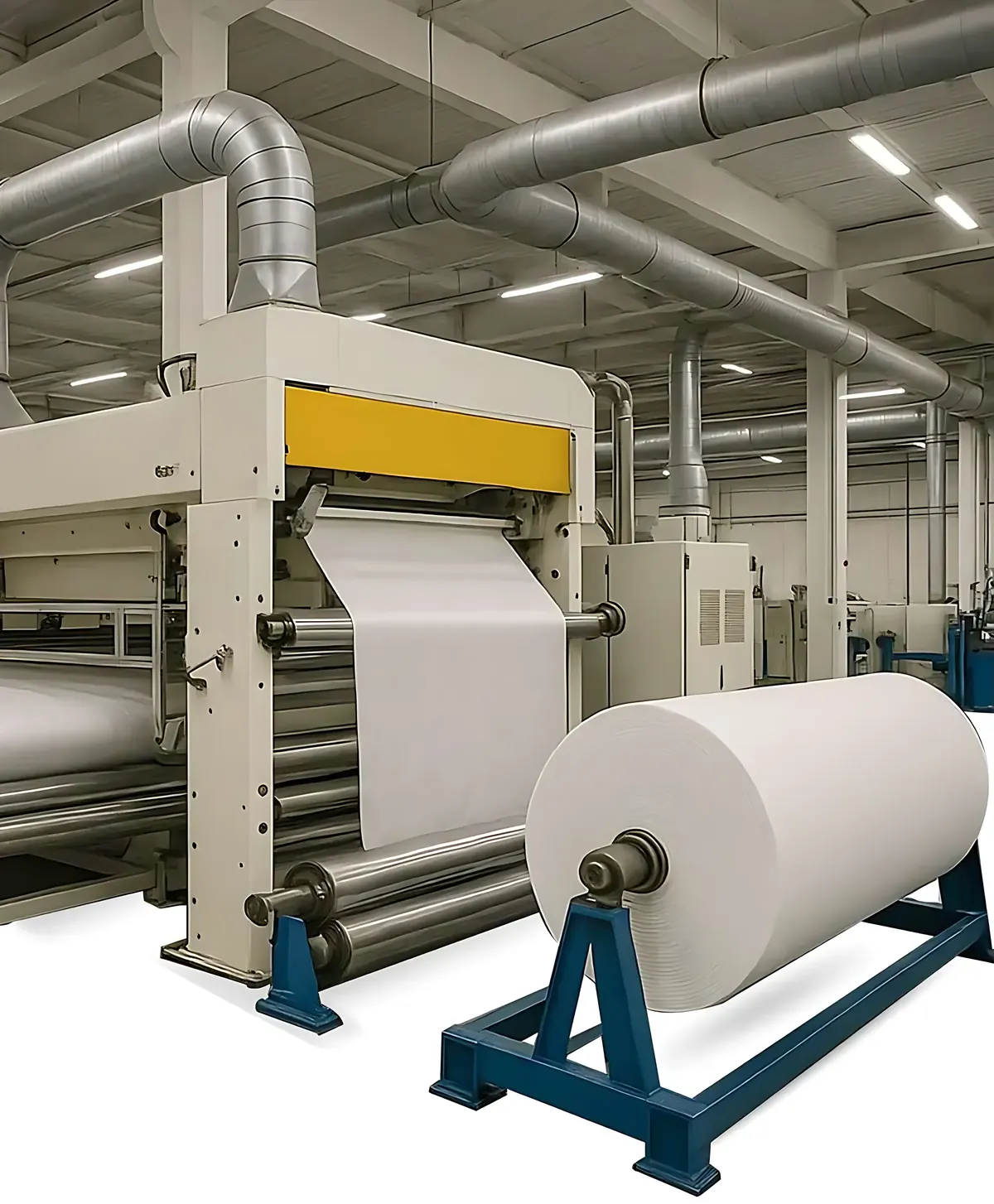
All spunlace is made the same way at the start: a carded web of loose fibres passes under fine, high-pressure water jets that tangle the fibres together, with no binder. For apertured spunlace, the web lies on a patterned support while the jets hit it. Where the support has raised points, the water pushes the fibres aside and leaves an opening. The result is a fabric with a regular pattern of holes, held together by the fibres between them.
Because the holes are formed in the same step as the bonding, they are part of the fabric's structure. They do not fray like punched holes and do not need a separate process.
Plain, apertured or embossed?
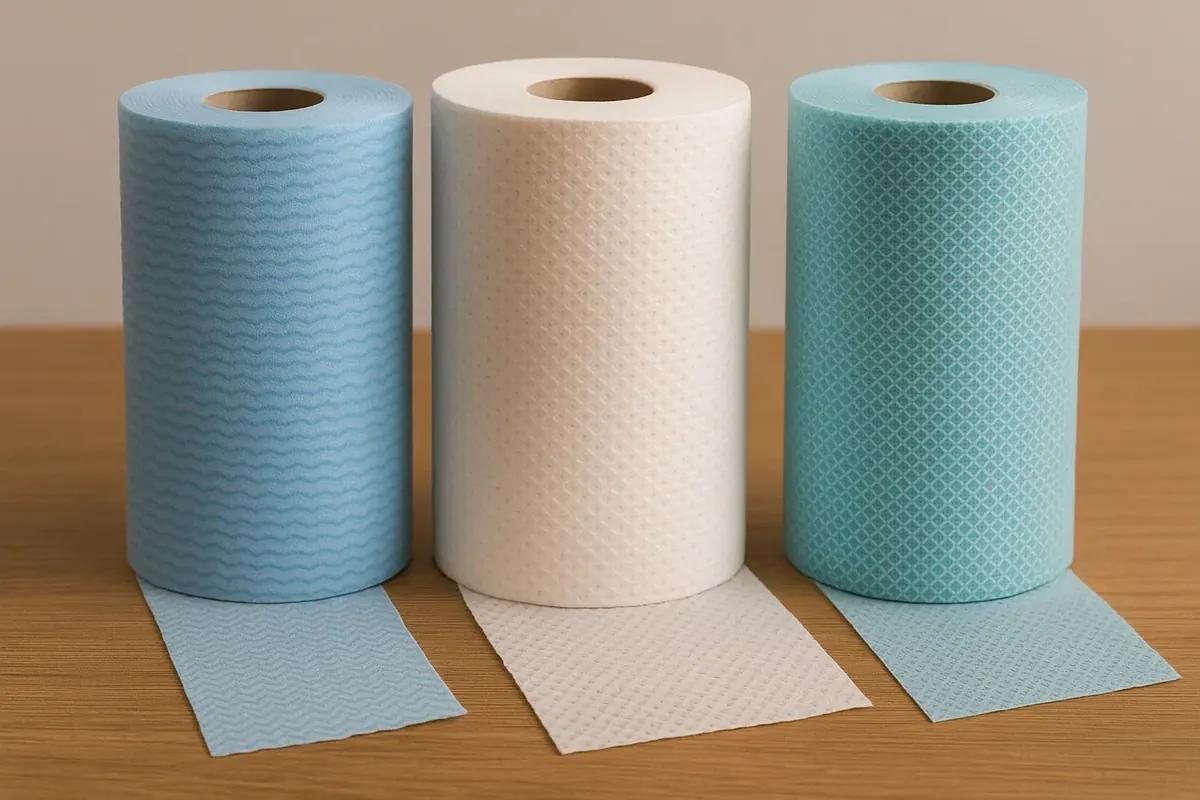
- Plain: a smooth, even surface. The best base for printing, laminating and wipes where a soft, flat feel matters most.
- Apertured: real holes through the fabric. More texture for cleaning, a more open structure for liquid to move through, and a lighter, airier look.
- Embossed: a raised pattern pressed into the surface, without holes. It adds bulk and a premium look while keeping the fabric closed.
The choice is about what the finished product has to do, not just how it looks.
Why buyers choose apertured spunlace
- Better cleaning action: the edges of the holes give the surface texture, which helps lift and hold dirt.
- Liquid flow: the open structure lets lotion and water move into and through the fabric, useful in wet wipes and cleaning cloths.
- Bulk and coverage: an apertured fabric can look and feel fuller for its weight.
- Recognisable look: many consumers link the mesh pattern with baby wipes and cleaning cloths.
Where it is used
- Wet wipes and baby wipes: one of the most common uses of apertured spunlace.
- Kitchen and household cloths: where scrubbing action and quick drying help.
- Cosmetic and facial pads: for a light texture on the skin.
- Industrial wipers: for wiping parts and surfaces. See our wiping products.
- Wound care and medical products: in some absorbent layers, where an open structure suits the design.
The trade-off: strength
Holes mean less fabric in each square centimetre, so an apertured spunlace is usually weaker than a plain one of the same fibre and weight. For most wipes this does not matter, but it does for products that are pulled hard from a pack or used wet for heavy scrubbing. If strength is critical, raise the weight, choose a stronger fibre blend, or ask for a pattern with smaller holes. Always check strength wet, in the lotion or liquid the product will meet.
How to write the specification
- End use: baby wipe, household cloth, cosmetic pad, industrial wiper, and whether it is used wet or dry.
- Fibre and blend: polyester, viscose, cotton, lyocell, bamboo viscose or a blend, with the ratio and a tolerance.
- Weight: GSM with a tolerance.
- Aperture pattern: hole size, shape and spacing. A physical sample of the pattern you want is the clearest reference.
- Strength: minimum machine-direction and cross-direction strength, measured wet if the product is used wet.
- Absorbency and lint: how you will test them and what result you need.
- Colour and printing: plain white, dyed or printed.
- Roll format: jumbo or slit rolls, width, diameter and core size.
How to test samples
- Hold it to the light: the holes should be clean, open and even across the width, with no blocked or torn areas.
- Wet strength: soak the fabric in your lotion and pull it the way a user would.
- Run it on your line: check how it folds, cuts and stacks, as apertured fabric can behave differently on converting machines.
- Compare rolls: ask for samples from more than one roll to check the pattern and weight stay consistent.
What to ask a spunlace supplier
- Which aperture patterns can you run, and can you send swatches of each?
- Which fibres and blends can you run with an apertured surface?
- What weight range do you recommend for my end use?
- Can you supply jumbo rolls and slit rolls to my width?
- Can I combine apertured spunlace with other fabrics or finished wipers in one container?
- For EU customers: can you provide REACH and SVHC declarations?
How we supply apertured spunlace
Samridhi Crreation is a manufacturer and exporter from India, established in 2004, with more than 1,000 clients. We make spunlace in-house, with an annual capacity of 12,000 MT, alongside our spunbond, meltblown, SMS/SSMMS, needle-punch and hot-air-through lines.
- Fibres: polyester, viscose, cotton, lyocell, bamboo viscose and blends.
- Surfaces: plain, apertured, embossed, printed and treated.
- Formats: jumbo rolls or slit rolls.
- Private label / OEM: we supply distributors and converters worldwide under their own brand.
- Orders: minimum one 40'HQ container, and 5 to 6 products can be combined in it.
- Shipping: FOB India (Mundra or Nhava Sheva) as standard, CIF and DAP on request.
- Packing: plain polybags as standard; printed cartons on request at extra cost.
- EU documents: REACH and SVHC declarations.
Send us your end use, fibre blend, weight and a sample of the pattern you want through our contact page, and we will reply with options and samples.