

Cabin Air Filter Media: A Buyer's Guide for Cabin Filter Makers
Also available in: Deutsch · Français · Español · Português · Italiano · Nederlands · Dansk · Svenska · Norsk · Suomi · Polski · Čeština · Slovenčina · Magyar · Русский · Türkçe · العربية · 日本語 · 简体中文 · 한국어 · Tiếng Việt · Bahasa Melayu
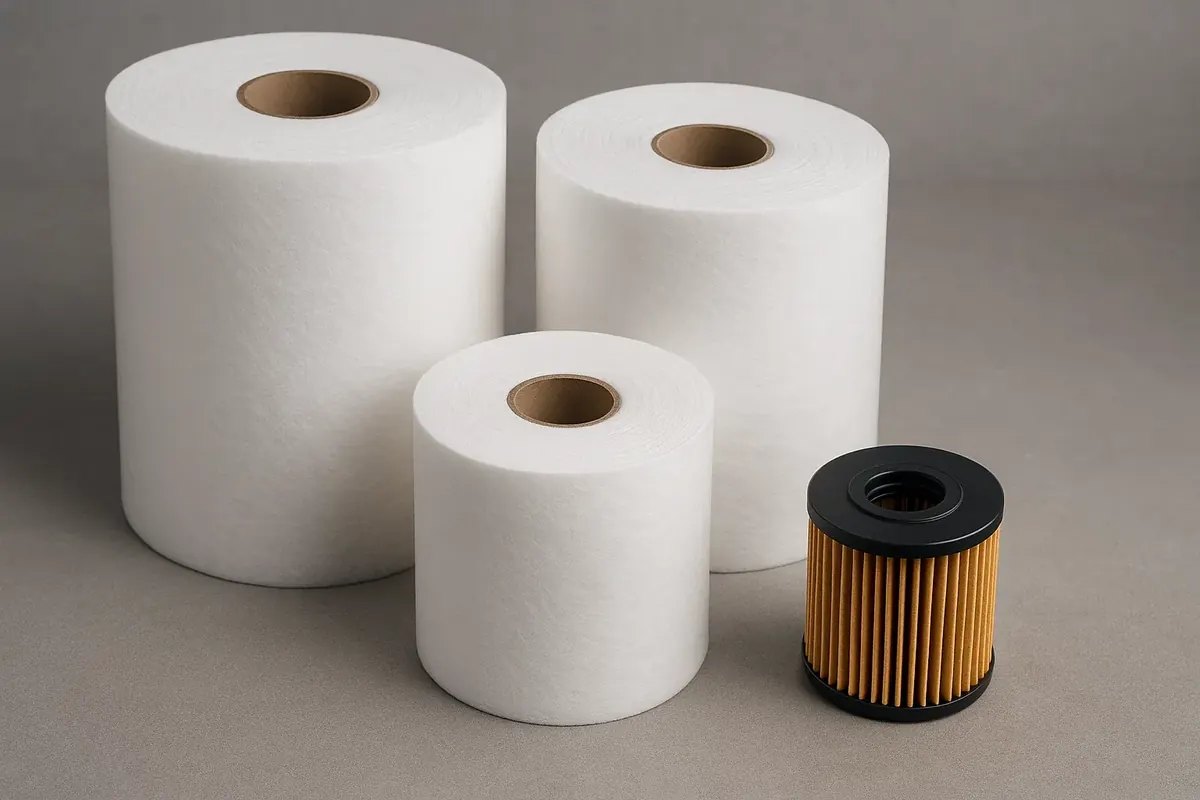
The cabin air filter is the part of a car that people actually breathe through. It cleans the air the ventilation fan blows into the car: road dust, pollen, soot, and, with a carbon layer, traffic smells and gases too. For the filter maker, almost everything that matters about the finished filter is decided by the media inside it.
This guide is for cabin filter manufacturers and filter brands that buy cabin air filter media in rolls. It explains the main media types, what to put in a specification, how to test samples and what to ask a media supplier. We make and supply the media only, not finished cabin filters.
What cabin filter media has to do
A cabin filter works in a hard place. The fan is small, so the media must let air through easily: a filter that blocks too much air makes the fan louder and the heating and cooling weaker. At the same time it should catch very fine particles. And it sits in an air stream that can be hot, cold, dry or very humid, sometimes all on the same day.
So the three things a buyer balances are:
- Capture: how well the media catches fine particles.
- Air resistance: how easily air passes through (low pressure drop).
- Stability: how well both of these hold up over time, heat and humidity.
The main media types
Particle media (electrostatic)
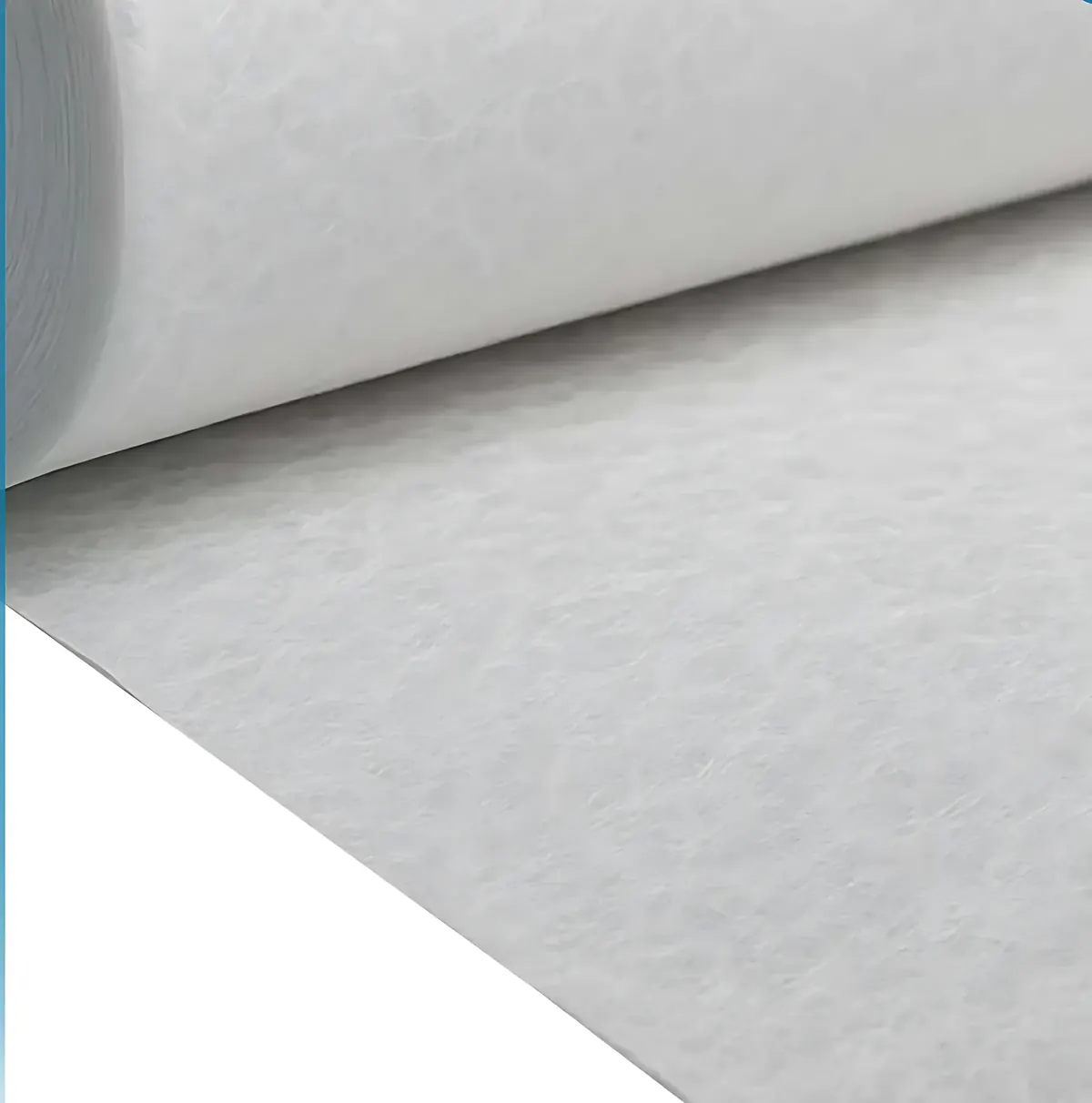
Most cabin particle filters use synthetic media made of fine fibres that carry an electrostatic charge. The charge pulls very small particles onto the fibres, so the media can catch sub-micron particles while staying open enough for easy air flow. A fine meltblown layer is often combined with a stronger carrier layer that gives stiffness for pleating.
Combined media with activated carbon
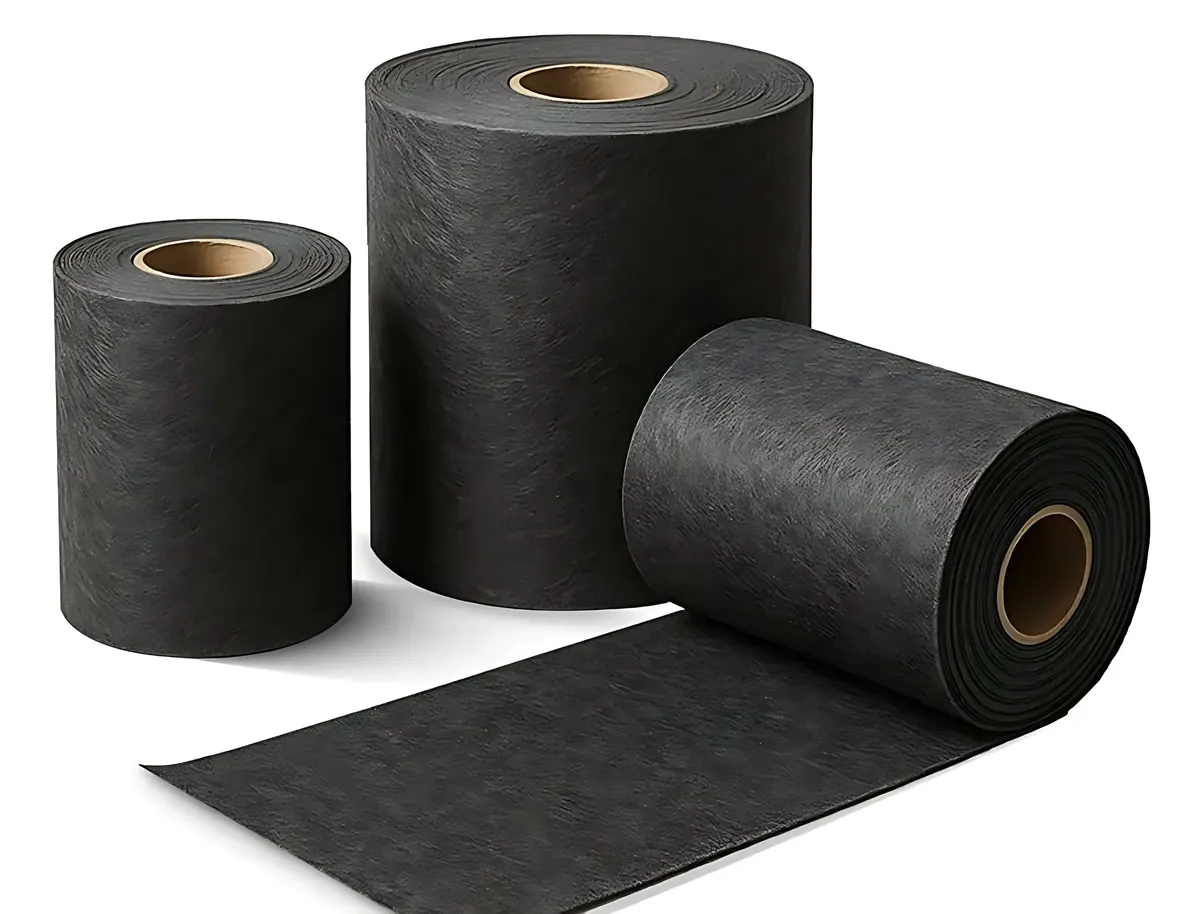
A combined or "carbon" cabin filter adds a layer of activated carbon to the particle media. The carbon takes up odours and some gases from traffic, so the media does two jobs in one pleat pack. The carrier for the carbon is usually a PET or PP nonwoven.
Fibre choice
Cabin media is made in PET (polyester), PP (polypropylene) and PTFE. PP is common for charged particle layers, PET for strong, stiff carriers that pleat well, and PTFE where its special properties are needed. Many cabin media combine two or more layers, each doing a different job.
How to write the specification
- Filter type: particle only, or combined with activated carbon.
- Layer build: which layers, in which fibres, in which order.
- Weight and thickness: in gsm and mm, with tolerances.
- Air permeability or pressure drop: at the air speed your filters run at.
- Capture target: the efficiency your filter must reach, measured with the test method your customer uses.
- Carbon layer: the amount of carbon you need, if it is a combined filter.
- Stiffness and pleating: your pleating method and pleat height.
- Roll format: width, roll length or diameter, and core size.
If you do not have every number, send a finished filter or the media you use today and tell us what you want to improve. A clear target makes the first sample far closer.
How to test samples
- Test the finished filter: pleat the sample media on your own line and test the filter, not just a flat sheet.
- Test after conditioning: electrostatic media can lose some charge over time and in humidity. Test again after storing samples in warm, humid conditions, so you see the result the driver will get, not only the result on day one.
- Check the smell: the media, and any carbon layer, should not add an odour of its own.
- Check consistency: compare samples from more than one roll and across the width.
Mistakes to avoid
- Judging media only on its starting efficiency.
- Choosing the most efficient media without checking air resistance: the fan and the driver will notice.
- Ignoring stiffness: soft media can collapse between pleats and block air flow.
- Changing media supplier without a full test on your own filters.
What to ask a media supplier
- Which cabin media do you make: particle, combined with carbon, or both?
- Which fibres and layer builds can you offer?
- Will you develop media to my target, or do you only sell standard grades?
- How stable is the media's performance in heat and humidity?
- Can you slit and wind to my pleating line's width and roll size?
- Can I combine cabin media with other filter media in one container?
- For EU customers: can you provide REACH and SVHC declarations?
How we supply cabin air filter media
Samridhi Crreation is a manufacturer and exporter from India, established in 2004, with more than 1,000 clients. We run our own meltblown, spunbond, SMS/SSMMS, needle-punch, spunlace and hot-air-through lines.
- Automotive filtration media: electrostatic fine-fibre cabin media, plus oil, fuel-water, cellulose and composite media.
- Air filtration media: cabin media in PET, PP and PTFE, and activated carbon media on PET or PP for odour and gas.
- Made to order: filter media is made to your specification. There are no stock grades.
- Media only: we supply media rolls to filter makers; we do not make finished filters.
- Private label / OEM: we supply filter makers and distributors worldwide.
- Orders: minimum one 40'HQ container, and 5 to 6 products can be combined in it.
- Shipping: FOB India (Mundra or Nhava Sheva) as standard, CIF and DAP on request.
- EU documents: REACH and SVHC declarations.
For the wider picture, see our automotive filter media buyer's guide. To start, send us your filter type, target and roll format through our contact page, and we will propose a media build and arrange samples.