
- Home
- Applications
- Spunbond substrates for coating and lamination
Application · Coated fabrics and laminates
Spunbond substrates for coating and lamination
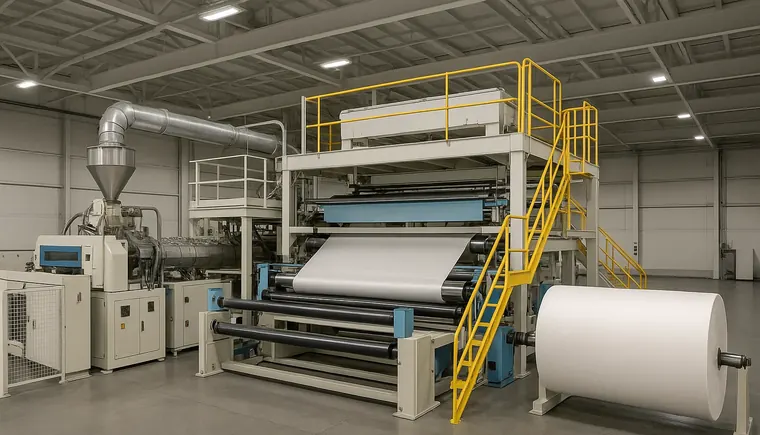
Coaters and laminators use spunbond nonwoven as the base fabric under PVC, PU and synthetic-leather coatings, and as the carrier in adhesive and hot-melt laminates. We make both PET and nylon 6 spunbond on our own lines in India: flat or point bonded, 15–150 gsm, in any colour.
Products
What we supply for this
| Product | What it does here |
|---|---|
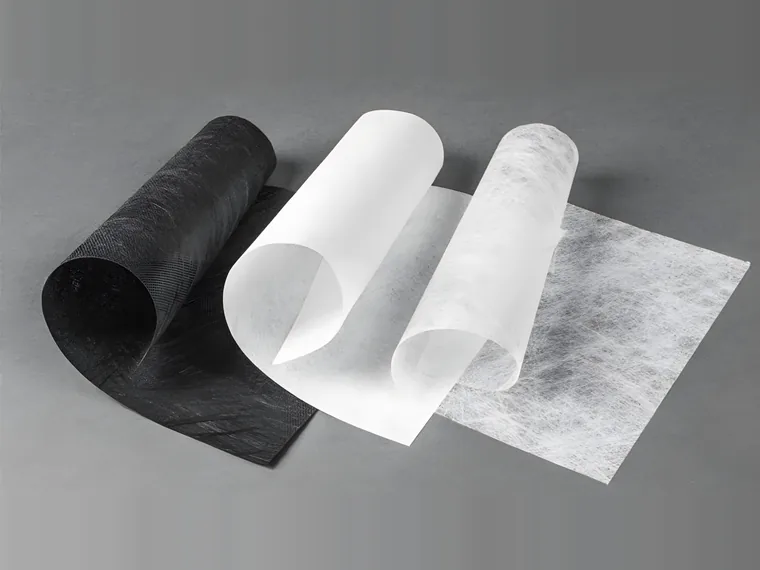
| PET Spunbond Non-Woven Fabric | The stable option: holds its size through hot coating, laminating and drying, with an even surface for PVC, PU and adhesive layers. |
| Nylon 6 Spunbond Non-Woven Fabric | The tough option: flexible, abrasion and tear resistant, and bonds well to adhesives and coatings; a carrier for adhesive and hot-melt lamination. |
What a substrate has to do
In a coated fabric or a laminate, the substrate is the layer everything else is built on. It is pulled through the coating head or laminator under tension, often heated in an oven, and stays in the finished product. On your line, that means:
- Even weight from edge to edge and from roll to roll, so the coating goes on evenly.
- Dimensional stability under heat and tension, so the web does not shrink, stretch or wrinkle in the oven.
- A surface that the coating or adhesive bonds to.
- Strength and tear resistance in the finished product.
- Clean edges and a clean slit, so rolls run without stops.
Flat bonded or point bonded?
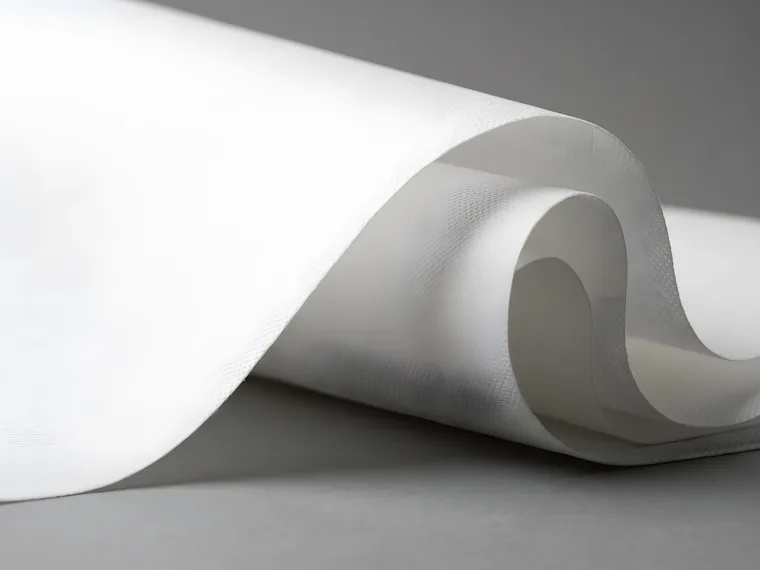
Flat-bonded spunbond is pressed between smooth heated rolls. It is thin, dense and smooth on both sides, with a closed surface that prints, coats and laminates evenly, and it suits coating substrates, carriers and tapes.
Point-bonded spunbond is fused only at small, regular dots. It is softer, more flexible, more open and more porous, and drapes and moulds well, which suits laminates and composites that must stay soft or follow a shape.
We make both bondings in both polymers, so you can compare them on your own line.
PET or nylon 6?
Both polymers have a much higher melting point than polypropylene. Beyond that, they suit different products.
- PET when the process runs hot or the product must hold its size: polyester keeps its strength and its dimensions at high temperatures, is stiffer, and takes up almost no moisture. It is used for PVC and PU coating, synthetic leather and hot laminating.
- Nylon 6 when toughness matters: abrasion and tear resistance, flexibility, strength at low weights and good adhesion to adhesives and coatings. It is also stable in contact with oils, fuels, greases and many organic solvents.
- Nylon absorbs a little moisture from the air: condition samples before you test them and keep rolls in their wrapping until use. Strong acids weaken nylon, so check chemical contact in the end product.
Welding, cutting and colour
Both polymers weld and cut cleanly with ultrasonic tools, leaving non-fraying edges, and PET spunbond can also be thermoformed. Both are made in white or any colour to your requirement. A substrate coloured to the shade of the coating helps where the cut edge or the back of the material can be seen.
Changing to a new substrate
If you are replacing a substrate you use now, send us its data sheet or a sample together with your process: coating type, oven temperature, line speed and tension. We will suggest a polymer, weight and bonding as a starting point, and you can try samples of both polymers side by side.
Rolls come as jumbo rolls or slit to your width, labelled and packed to your specification. The minimum order is one 20-foot container per product.
What to tell us when you enquire
- Coating or laminate: PVC, PU, synthetic leather, adhesive, hot-melt or other
- Process temperature, line speed and tension
- Polymer: PET or nylon 6 (or samples of both)
- Weight (gsm) and bonding type
- Colour
- Roll width, length and core size
- Quantity and destination port
What happens next
- Send us your enquiry with the details listed here.
- Our export team replies within 24 hours on working days.
- We send free samples and pay the courier.
- You test the samples; we confirm the specification and quote for a container.
Supply
How we supply it
- Production
- Our own spunbond lines in India
- Polymers
- PET and nylon 6 (PA6)
- Weight
- 15–150 gsm
- Bonding
- Point bonded or flat calender bonded
- Colours
- White or any colour to your requirement
- Properties
- Coatable, ultrasonically weldable; PET also thermoformable
- Supply
- Jumbo rolls or slit to width; clean, non-fraying edges
- Minimum order
- One 20-foot container per product
- Brand
- Private label / OEM: your brand, labels and packing
- Shipping
- FOB India (Mundra or Nhava Sheva) as standard; CIF and DAP on request
- EU documents
- REACH and SVHC declarations
- Samples
- Free. We pay the courier.
FAQ
Questions buyers ask
Which spunbond is best as a PVC or PU coating substrate?
PET when the coating is applied or dried hot, because polyester keeps its size and strength at high temperatures. Nylon 6 when the product must be tough and flexible and bond strongly to the coating. We can send samples of both.
Flat bonded or point bonded for coating?
Flat bonded gives a thin, dense, smooth surface that coats and laminates evenly. Point bonded is softer, more open and more flexible, for laminates and composites that must drape or mould. We make both in PET and nylon 6.
Do you supply spunbond for adhesive and hot-melt lamination?
Yes. Nylon 6 spunbond is used as a carrier for adhesive and hot-melt lamination, and PET spunbond as a lamination substrate.
Which weights and colours do you make?
15 to 150 gsm, in white or any colour to your requirement.
What is the minimum order?
One 20-foot container for PET spunbond, and one 20-foot container for nylon 6 spunbond.
Can I get samples?
Yes. Samples are free and we pay the courier. Tell us the end use, weight, bonding type and colour.
Buyer's guides
Related applications
Request a quote
Quick enquiry
Tell us what you need. We reply within 24 hours on working days.
- Manufacturer since 2004, 1,000+ clients
- Our own production lines in India
- Free samples – we pay the courier
- Private label, mixed 40'HQ containers