
Gas Turbine Filter Media: A Buyer's Guide for Air-Intake Filter Makers
Also available in: Deutsch · Français · Español · Italiano · Nederlands · Polski · Čeština · Svenska · Norsk · Suomi · Русский · Türkçe · 日本語 · 简体中文
A gas turbine breathes an enormous volume of air every hour. Whatever is in that air, whether dust, sand, salt, pollen or moisture, ends up in the compressor unless the intake filters stop it. That can mean blade erosion, fouling, corrosion and lost output, so the filter media inside the intake is a small part of the system with a large effect on how the turbine runs.
This guide is for companies that make or rebuild gas turbine intake filters, and for distributors who supply them. It explains where each type of media is used, how to write a clear specification, and what to ask a media supplier before you order rolls.
Where intake filters are used
Gas turbines run power stations, drive compressors and pumps on oil and gas sites, and power ships and offshore platforms. The site decides what the filters have to deal with:
- Desert and dry inland sites: heavy, fine dust and sand storms. Filters load quickly, so dust-holding capacity and cleanability matter most.
- Coastal and offshore sites: salt in the air and high humidity. Moisture and salt that pass the filters can corrode the compressor.
- Humid and tropical sites: fog, rain and high humidity. Wet media can lose strength or raise its pressure drop.
- Industrial and urban sites: fine particles and pollution that foul compressor blades over time.
The filter stages and their media
Most intake systems use several stages, each with a different job. Media is usually bought for a specific stage, so name the stage first.
- Pre-filters: pads, panels or bags that catch the coarse dust and protect the next stage. Synthetic nonwoven media is common here because it is light, strong and holds a lot of dust.
- Final or high-efficiency filters: pleated panels or compact filters that catch the fine particles. These often use composite media, where a fine fibre layer gives the efficiency and a stronger carrier layer gives the strength.
- Self-cleaning (pulse-jet) cartridges: cylindrical or conical cartridges cleaned by short blasts of compressed air, widely used at dusty sites. The media must release its dust cake cleanly and stand up to thousands of pulses. Cellulose and cellulose-synthetic blends are a common choice.
Cellulose, synthetic or composite?
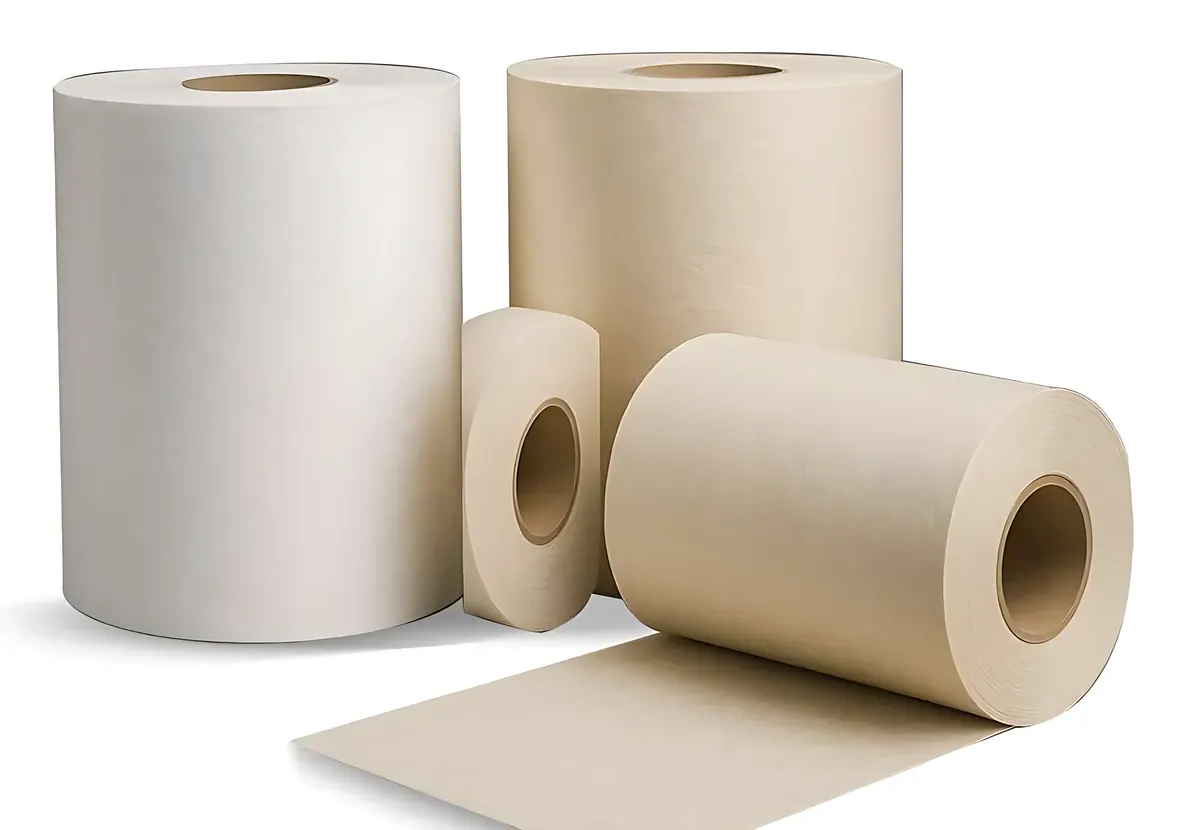
Cellulose media is economical, pleats well and holds dust well. It is a long-established base for pulse-jet cartridges and many pleated elements. Its weak point is moisture: in very wet conditions it can lose strength unless it is treated or blended.
Synthetic media is stronger and is not weakened by water, so it suits humid sites, pre-filter stages and bags. It also keeps its shape well over a long service life.
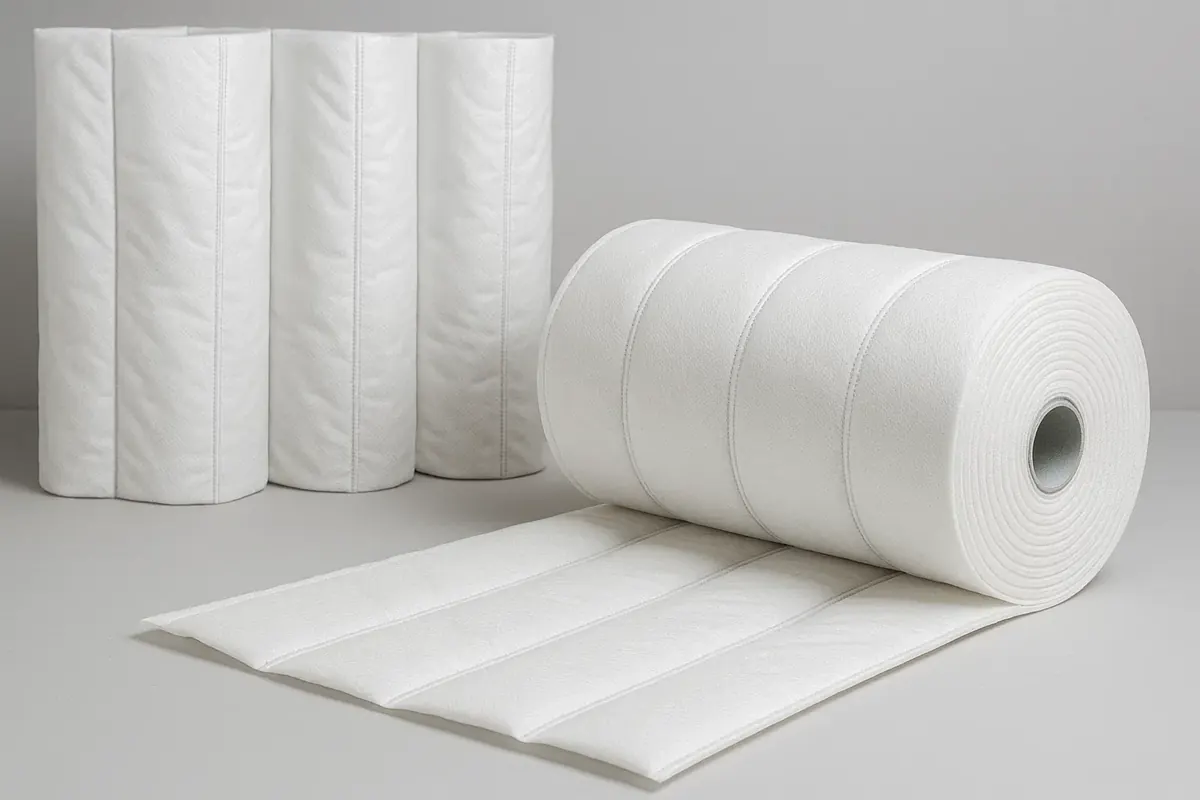
Composite media combines layers to get the best of each, for example a fine meltblown or fine-fibre layer on a stronger synthetic or cellulose carrier. This raises efficiency without giving up too much dust-holding capacity or strength.
There is no single best media. The right choice depends on the stage, the site, the service interval the turbine operator expects, and the cost per filter.
How to write the specification
A clear specification saves weeks of sampling. Include:
- Filter stage and type: pre-filter pad, bag, pleated panel, compact filter or pulse-jet cartridge.
- Site conditions: dust levels, humidity, salt, temperature range.
- Performance targets: efficiency, starting pressure drop and dust-holding capacity, measured with the test method your customer uses.
- Media build: cellulose, synthetic or composite, and any layer or treatment you need for moisture or cleaning.
- Physical properties: basis weight, thickness, air permeability and strength, each with a tolerance.
- Converting: your pleating method, pleat height and any curing or heat on your line.
- Roll format: width, roll length or diameter, and core size.
If you do not have every number, describe the finished filter and the site, and ask the supplier to propose a starting media for trials.
How to test samples
- Test finished filters, not flat sheets. Pleated media behaves differently, so build filters and test them on your own rig.
- Test in the wet. For humid and coastal sites, check how the media behaves when damp: strength, pressure drop and pleat shape.
- Test the cleaning. For pulse-jet cartridges, run a long series of pulses and check that pressure drop recovers and the media does not crack.
- Check roll-to-roll consistency. Ask for samples from more than one roll and compare them.
Mistakes to avoid
- Buying on efficiency alone. A very efficient media that blocks quickly can cost the operator more in pressure loss and filter changes.
- Ignoring moisture. Many intake problems start with fog or rain, not with dust.
- Copying a media from one site to another. A media that works in the desert may not suit a humid coast.
- Leaving out the converting process. Pleating and curing conditions change which media works on your line.
What to ask a media supplier
- Which media types do you make: cellulose, synthetic, composite?
- Will you develop media to my performance target and site conditions, or do you only sell standard grades?
- Which processes do you run in-house to build composite layers?
- Can you slit and wind to my pleating line's width and roll size?
- Can you send samples from a normal production run?
- Can I combine filter media with other products in one container?
- For EU customers: can you provide REACH and SVHC declarations?
How we supply gas turbine filter media
Samridhi Crreation is a manufacturer and exporter from India, established in 2004, with more than 1,000 clients. Our filtration media range includes cellulose and composite media for gas turbine intakes, alongside synthetic media for air filtration and dust collector bags. We run our own meltblown, spunbond, SMS/SSMMS, needle-punch, spunlace and hot-air-through lines.
- Made to order: filter media is made to your specification. There are no stock grades.
- No glass-fibre media: we make cellulose, synthetic and composite media only.
- Private label / OEM: we supply filter makers and distributors worldwide.
- Orders: minimum one 40'HQ container, and 5 to 6 products can be combined in it.
- Shipping: FOB India (Mundra or Nhava Sheva) as standard, CIF and DAP on request.
- EU documents: REACH and SVHC declarations.
Send us your filter type, site conditions and performance target through our contact page, and we will propose a media and arrange samples for your trials.